
El Cercle Català de Madrid lamenta profundament la mort de Rocío Fernández Fernández, actriu i companya del nostre Grup de Teatre Santiago Rusiñol i sòcia molt estimada de la nostra entitat.
Rocío va formar part essencial de la vida cultural del Cercle. El compromís constant, la generositat i la passió pel teatre la van convertir en una de les sòcies més actives i valuoses de la Secció de Teatre. En reconeixement a aquesta entrega, a la seva trajectòria ia la seva implicació exemplar, va ser condecorada el 2024 amb la Insígnia de Plata del Cercle Català de Madrid, distinció que va reflectir l’agraïment i l’admiració que li professàvem.
La seva pèrdua deixa un buit immens, tant a nivell artístic com a humà. Els qui vam tenir la fortuna de compartir escenari, assaigs i projectes amb ella recordarem sempre el seu talent, entusiasme i qualitat personal.
El Cercle Català de Madrid, la seva Junta Directiva, el Grup de Teatre Santiago Rusiñol i tots els seus socis i sòcies volen expressar el seu més condol a la seva família, amistats i companys, acompanyant-los en aquests moments de dolor. Descansi en pau.
Cercle Català de Madrid · Grup de Teatre Santiago Rusiñol
Madrid, 30 de gener del 2026.


El Cercle Català de Madrid vol expressar el seu més profund condol pel greu accident ferroviari ocorregut a Adamuz (Còrdova) el passat diumenge, 18 de gener de 2026, una tragèdia que ha commocionat tota la societat i que, per la seva magnitud, es troba entre els sinistres ferroviaris més greus dels darrers temps.
Volem traslladar les nostres més sinceres condolences a les famílies de les persones traspassades, així com el nostre suport i solidaritat a totes les persones ferides i afectades per aquest tràgic succés.
En aquests moments de profund dolor, el Cercle Català de Madrid s’uneix al dol de la ciutadania i expressa la seva proximitat i respecte envers les víctimes, els seus familiars i totes les persones i comunitats afectades.
Amb el nostre més sentit condol i solidaritat.
Cercle Català de Madrid
Madrid, 19 de gener de 2026

El Cercle Català lamenta profundament la defunció del Sr. Francisco Bordas, exsecretari de l’entitat, ocorreguda la setmana passada.
El Sr. Bordas va exercir les seves funcions amb gran compromís, rigor i vocació de servei, contribuint de manera significativa al funcionament i al desenvolupament del Cercle durant la seva etapa com a secretari. La seva dedicació i el seu sentit institucional deixen una empremta que forma part de la història de la nostra entitat.
Des de la Junta Directiva, el personal i el conjunt de socis, volem expressar el nostre més sincer condol a la seva família i éssers estimats, als quals acompanyem en aquests moments de dolor.
Descansi en pau.
Cercle Català de Madrid.
Madrid, a 12 de gener de 2026

En memòria del nostre company Blas.
Des del Cercle Català volem expressar el nostre més profund pesar per la mort del nostre estimat company Blas Ruiz Carrasco, conserge de l’entitat, ocorregut el passat dissabte 10 de gener.
Avui ens hem pogut acomiadar d’ell amb l’afecte i el respecte que sempre es va saber guanyar entre socis, companys i amics. Blas va formar part de la vida quotidiana del Cercle i deixa un record inesborrable per la seva dedicació, proximitat, bon humor i professionalitat.
En nom de la Junta Directiva, del personal i de tots els socis, traslladem el nostre més sentit condol a la seva família i amics, a qui acompanyem en aquests moments de dolor.
Descansa en pau, Blas. Sempre et recordarem.
Cercle Català de Madrid.
Madrid, a 12 de gener de 2026

El pasado 1 de octubre, la triste noticia del fallecimiento de la Dra. Jane Goodall a sus 91 años de edad mientras dormía en medio de su gira por Estados Unidos, resonó en todo el mundo. Para todas las oficinas del Instituto Jane Goodall, la pérdida de nuestra querida fundadora ha sido un golpe duro, pero seguimos trabajando para mantener vivo su legado y honrar su vida, con la inspiración y esperanza que siempre nos transmitió.
Su funeral fue una ceremonia privada para su familia y amigos más cercanos, y se realizó en una iglesia local de su pueblo, Bournemouth, en el sur de Inglaterra. Su cuerpo fue cremado.
En su recuerdo y de la misión que ella inició, en todo el mundo se han organizado homenajes que reflejan la importancia de su figura como científica, conservacionista y activista por un mundo mejor para todos los seres vivos que habitan el planeta.
Desde el Instituto Jane Goodall España queremos compartir algunos de esos momentos tan especiales para celebrar la vida de nuestra querida Jane.
Homenaje en Washington: una emotiva despedida
El 12 de noviembre, el Instituto Jane Goodall Estados Unidos organizó un emotivo homenaje en la Catedral de Washington al que acudieron familiares, amigos y representantes del mundo científico, político y ambiental.

Entre quienes hablaron estuvo Merlin van Lawick, nieto de Jane, que compartió recuerdos y promesas de continuar con el legado de su abuela. El actor y activista Leonardo DiCaprio la describió como “amable, curiosa, divertida, ingeniosa y absolutamente imparable” y resaltó su ferviente esperanza: “Jane siempre guió por la esperanza, nunca se dejó llevar por la desesperación; se centró en lo que se podía hacer”, en cuanto a su compromiso con el planeta, los animales y las futuras generaciones.
Durante la ceremonia hubo música en vivo y el acto comenzó con un saludo de 20 perros de terapia en los escalones de la Catedral, en reconocimiento a su destacado amor por los animales, especialmente los perros, que eran sus preferidos.
Como broche final a este emotivo evento, que conmovió a los miles de personas que acudieron, una gran marioneta de una paloma de la paz fue levantada por jóvenes de Raíces & Brotes, el símbolo del mundo pacífico que la Dra. Jane Goodall siempre imaginó y por el que trabajaba tan intensamente, también como Mensajera de la Paz de la ONU.

Actos en su recuerdo en España
Ese mismo día, España se sumó a la celebración con dos actos significativos.
Por la mañana, la Facultad de Veterinaria de la Universidad Complutense de Madrid (UCM), donde la Dra. Jane Goodall fue distinguida como Doctora Honoris Causa en 2018, acogió un homenaje organizado conjuntamente con el IJG España. El acto reunió a representantes del IJGE, autoridades universitarias y organizaciones vinculadas a la conservación, así como al ministro de Asuntos Sociales, Consumo y Agenda 2030, el Sr. Pablo Bustinduy, y al director general de Derechos de los Animales, el Sr. José Ramón Becerra. También participó la Dra. Rebeca Atencia, directora del IJG Congo, que junto a Federico Bogdanowicz, director general del IJGE, recordaron no solo a la Jane icono global, sino a también a la Jane persona, como íntimos amig@s de ella.
Durante este encuentro, se puso en valor la contribución científica de la Dra. Jane y su incansable activismo en defensa de los animales, su bienestar y sus hábitats, trabajando por un mundo mejor donde los humanos y los otros animales puedan vivir en armonía.
Para finalizar, se anunció la plantación simbólica en abril de un madroño en el Jardín Botánico de la UCM, como señal viva del legado de esperanza y respeto por la naturaleza que Jane representaba.
Por la tarde, el Museo de Ciencias Naturales (MNCN) y la Sociedad Española de Bioquímica y Biología Molecular (SEBBM) organizaron una mesa redonda sobre el legado de Jane, con la participación de la Dra. Rebeca Atencia.

Un reconocimiento global
La ceremonia en Washington y los eventos en Madrid son parte de una serie internacional de tributos rendidos a Jane Goodall en las últimas semanas, como por ejemplo en Canadá, Australia, Austria, Países Bajos, Corea del Sur, Suiza, Turquía, Alemania, Francia, Ruanda, Taiwán, Tanzania, Uganda, India, Japón, Hungría, Bélgica, Italia, Singapur, Malasia, Argentina, e incluso en el Congreso Mundial de la UICN en Abu Dhabi, con participación de representantes del IJG.
Las formas de recordarla han sido muy variadas, reflejando la diversidad cultural y las tradiciones locales. Algunas han incluido proyecciones de documentales y vídeos sobre su vida y trabajo, otras han organizado espacios de memoria con libros de condolencias y exposiciones artísticas para dejar mensajes personales. Alineados con el espíritu de Jane, se han llevado a cabo plantaciones de árboles como símbolo de vida y esperanza, por ejemplo, el pasado noviembre en Calafell (Barcelona).
Estos homenajes reflejan el cariño y admiración hacia Jane y reafirman la enorme huella que ha dejado en el mundo y el compromiso colectivo de continuar con su misión y transformar la esperanza en acción.
Próximo homenaje en Barcelona
El 15 de diciembre tendrá lugar un nuevo homenaje en Barcelona, en el Ilustre Colegio de la Abogacía de Barcelona (ICAB). Todavía quedan plazas disponibles para quienes quieran asistir. Puedes reservar tu lugar a través de este formulario.
Para ayudarnos a continuar con el legado de Jane, conoce cómo puedes contribuir desde aquí.
On 11 November 2025, educators, policymakers, and partners from six countries came together for the webinar “We Are Transforming Education: National Examples to Promote and Integrate Ethics Education – Successes, Challenges, and Opportunities,” to share how they are reshaping national education systems through the Ethics Education Fellowship program.
The Fellowship is a collaborative initiative, implemented since 2022 with six ministries of education: Bangladesh, Indonesia, Kenya, Mauritius, Nepal, and Seychelles. Its goal is to integrate ethics education into national education systems, helping children grow as empathetic, responsible, and engaged citizens. It utilizes the Ethics Education Approach, which is based on intercultural and interfaith learning and dialogue, fostering critical thinking, ethical reflections and mutual understanding.
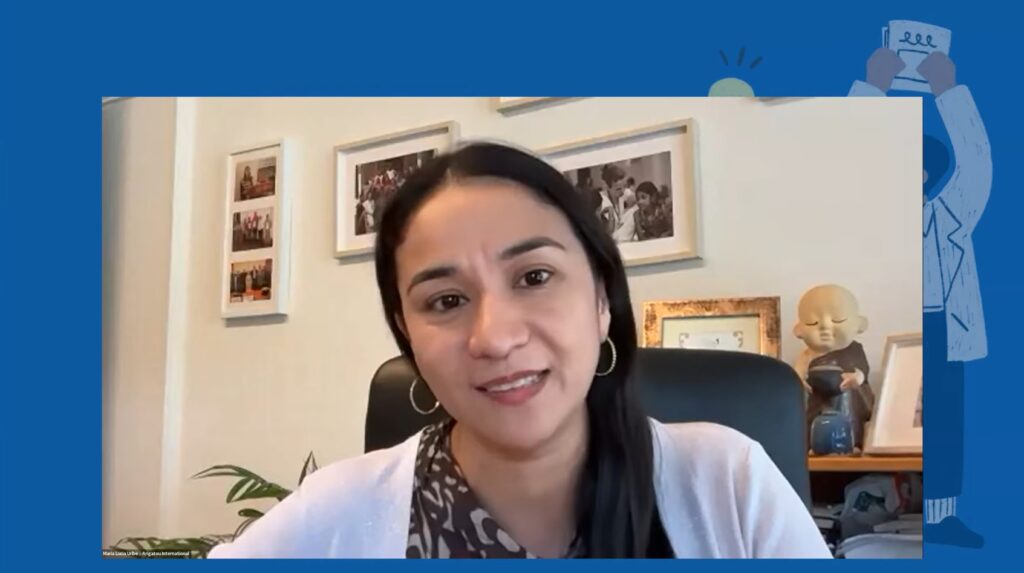
Ms. Maria Lucia Uribe, Executive Director of Arigatou International, opened the session, highlighting the crucial role of ministries of education in making change last. “We are shaping not only lessons, but relationships, school cultures, and social dynamics. We are, in essence, re-grounding education in human dignity,” she said.
The Ethics Education Fellows, who lead the program in each country, together with other representatives, shared key achievements, innovations, and lessons learned from their journeys of integrating ethics education at the national level.
Bangladesh:
In Bangladesh, the program has gained strong momentum, expanding its reach to 42 schools and centering on five learning themes: self-awareness, dialogue, problem-solving, community engagement and respect for diversity.
Dr. A.Q.M. Shafiul Azam, Director of the Planning and Development Wing at the Directorate of Secondary and Higher Education, described how ethics education is being institutionalized in the country’s systems: teacher-training manuals, curricula and education policy. By embedding the approach in official materials, he said, the work is aligning with national goals for quality education and peacebuilding.
Indonesia
With over 1,400 teachers and 10,000 students directly involved, and dissemination reaching more than 22,000 educators, what began as a pilot has become a national movement. Indonesia’s program aligns with its curriculum reforms and draws from local cultural wisdom, in particular with its Pancasila profile and habituation learning.
“We try to engage parents, local government, universities, and communities to bring ethics education into a shared movement that connects school life with community values,” said Mr. Rudy Januarto, Principal of Karia Yosef Kindergarten.
Kenya
Representing Kenya, Dr. Ndegwa Gichuhi, Director of Policy, Partnerships and East African Affairs, and Ms. Mary Kangethe, Director of the Education Programme at the Kenya National Commission for UNESCO, explained how ethics education is being woven into national priorities. By aligning the program with competency-based education and Global Citizenship Education, and by using digital platforms and peer-learning networks, Kenya is integrating ethics into teacher professional development and curriculum planning.
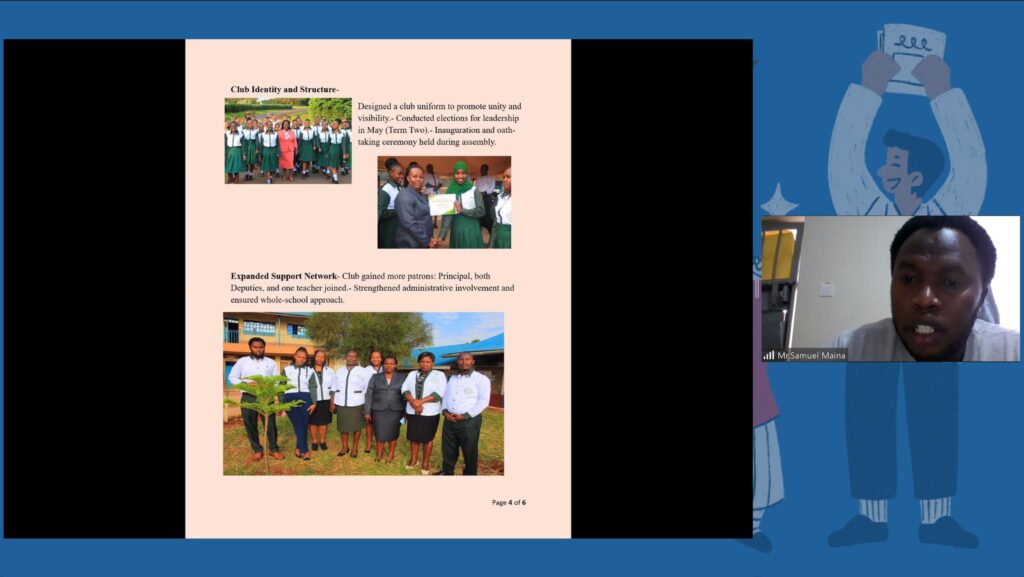
On the ground, teachers are already seeing the impact: Mr. Samuel Maina of St. Annuarite Gatanga Secondary School said the program “has promoted respect and harmony. It has helped our students reduce conflict within the school. We have nurtured responsible students who now act with fairness and a sense of service.”
Mauritius
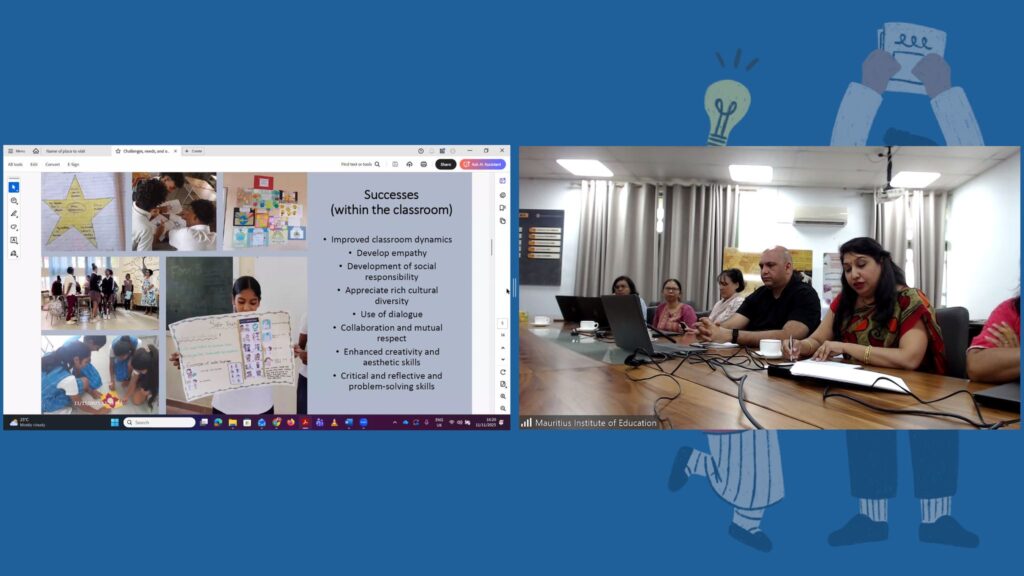
Ms. Mila Devi Sewruttun Doseiah, Director of the Mauritius Institute of Education, described a steady shift as ethics education is woven into life skills and social studies. Classroom discussions and community outreach are starting to foster greater empathy and intercultural understanding among students. “The emphasis on mutual respect and equitable participation has changed classroom dynamics, positioning students as co-creators of ethical knowledge rather than passive recipients,” she said.
Looking ahead, plans include launching ethics education clubs and short courses for educators to build long-term sustainability.
Nepal
Dr. Divya Diwadi, Deputy Secretary-General of the National Commission for UNESCO, explained that Nepal has integrated ethics education into teacher guides and curricula, with direct budget allocations from provincial governments demonstrating strong institutional commitment. The program has reached multiple districts and led to measurable improvements in students’ behavior, especially in respect, inclusion, and civic engagement.
Ms. Anjana Shakya, Chairperson of Himalayan Human Rights and actively involved in the Monitoring, Evaluation, and Learning process, shared powerful, heartening stories of students and teachers forging new friendships, challenging old assumptions, and creating more inclusive classroom dynamics. She described one school where pupils had previously sat apart by caste, religion, or gender; after participating in the program, they formed friendships across those divides and began spending more time together, becoming noticeably closer.
Seychelles
“Institutionalization has been one of our biggest achievements,” stated Ms. Erica Derjacques-Inacio, Director General of the Curriculum Leadership & Implementation Division, Education Services Department, Ministry of Education.
This year, ethics education was successfully integrated into personal and social studies as well as religious education. The country also developed a new diploma program at the Seychelles Institute of Teacher Education and produced two new learning modules. Ms. Derjacques-Inacio emphasized that teachers are reporting stronger student values, enhanced critical thinking, and more inclusive school cultures.
Two teachers enriched the discussion by sharing experiences from their classrooms. “In my school, ethics education has helped students develop values such as respect, honesty and compassion,” said Ms. Hildre Boniface. “It has encouraged them to think critically about moral issues and to make responsible choices in their daily lives.” “My greatest reward,” added Ms. Sharon Fredric, “is seeing my students grow in confidence.”
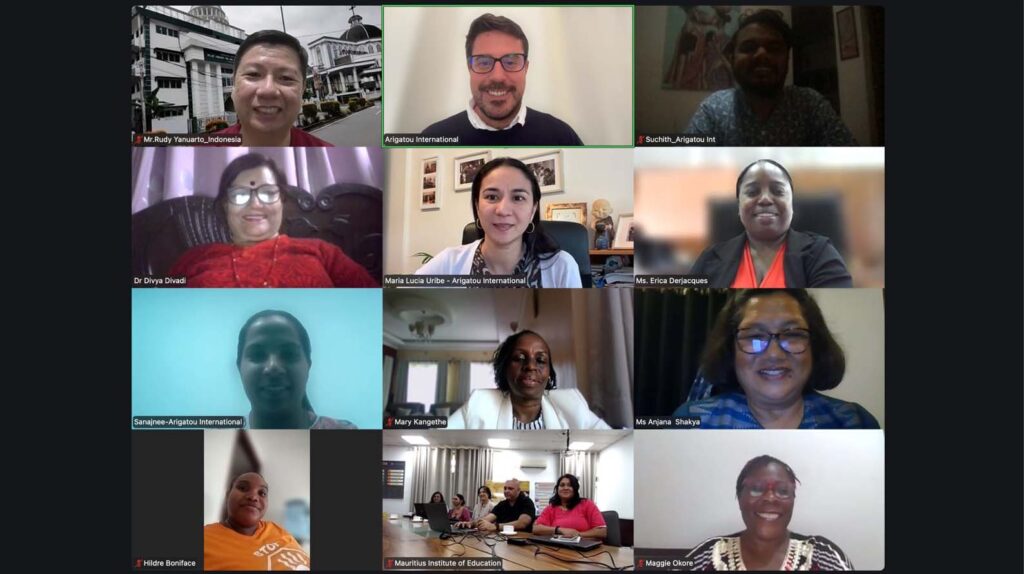
Across all six countries, teachers are seeing the same results: children are more empathetic, responsible, and aware of the issues that affect their communities. Classroom lessons are becoming real-world experiences rooted in dialogue, reflection, and service.
Dr. Margaret Okore from the Association for the Development of Education in Africa (ADEA) concluded:
“Transforming education is not just about systems; it is about people. It is about the choices we make, the examples we set, and the values we live by. When integrity guides leadership, when empathy informs teaching, and when learners are empowered to act with courage and conscience, then, and only then, will transformation be complete.”
The event was organized by the Ethics Education Fellowship partners: Arigatou International, the Guerrand-Hermès Foundation for Peace, Human Fraternity, KAICIID, and UNESCO, in collaboration with the six participating Ministries of Education, teacher training institutions, and UNESCO national commissions. Special thanks go to the Fellows for their unwavering commitment to children’s wellbeing and peacebuilding.
“No puedes pasar un solo día sin tener un impacto en el mundo que te rodea. Lo que haces marca la diferencia, y tienes que decidir qué tipo de diferencia quieres marcar. La gente siente que es muy poca cosa y que no puede hacer nada ante la inmensidad del problema, pero si cada uno de nosotros, cada día, tomamos conciencia de lo que hacemos, el cambio sí es posible. El futuro depende de que todos nos unamos ahora y hagamos algo para intentar curar el daño que hemos infligido a este planeta. Aún no es demasiado tarde”, Jane Goodall.
Ese fue el mensaje que Jane dedicó toda su vida a transmitir, inspirando a millones de personas en todo el mundo a pasar a la acción. El motivo por el que nunca renunció a su labor y hasta su último día continuó viajando, participando en conferencias y eventos.
Además de su labor como científica y conservacionista, trabajando por los chimpancés y otras especies, Jane también fue la creadora del programa ambiental y humanitario Raíces y Brotes, a través del cual se anima a jóvenes y no tan jóvenes a trabajar por un mundo más justo, sostenible y pacífico.
Precisamente, la determinación de la gente joven para cambiar las cosas, una vez que están informados y empoderados, era una de sus principales razones para la esperanza.
Otra razón para la esperanza era el indomable espíritu humano, esa capacidad para abordar lo que parece imposible y no rendirse hasta lograrlo, y estaba convencida que, desde la empatía y el compromiso, se puede generar un cambio real.
Su legado sigue y seguirá vivo en cada pequeña decisión que tomemos por el bien de los animales, las personas y el medio ambiente, transformando la esperanza en acción.
Tú también puedes pasar a la acción y marcar una diferencia participando con tu familia o amigos de nuestro programa educativo gratuito Raíces y Brotes, apoyando la misión del IJG como Soci@ Chimpamig@ o donante, convirtiéndote en voluntari@ del IJG, o simplemente ayudando a difundir el mensaje de Jane.
Jane inició el camino, los próximos pasos dependen de nosotros…
Con tristeza, el Instituto Jane Goodall España lamenta comunicar el fallecimiento de la fundadora de la organización, la Dra. Jane Goodall, a la edad de 91 años, por causas naturales mientras dormía, en California, donde se encontraba durante su gira por los Estados Unidos.
La vida y el trabajo de la Dra. Goodall dejan una huella indeleble en nuestra comprensión de los animales, la humanidad y el entorno que todos compartimos al afianzar la protección de toda la biodiversidad y del futuro del planeta, promoviendo un estilo de vida más sostenible en las sociedades.
Durante años, su labor ha inspirado la curiosidad, la esperanza y la compasión en innumerables personas de todo el mundo, y ha allanado el camino a muchos otros, en particular a los jóvenes que le dieron esperanzas para el futuro.
En 1960, la Dra. Goodall comenzó el estudio sobre chimpancés salvajes más largo del mundo en el Parque Nacional de Gombe, en Tanzania, que hoy todavía continúa. El avance y la observación más famosa de Jane fue la fabricación y el uso de herramientas en animales no humanos, que redefinió para siempre la humanidad. A este hallazgo le siguieron muchos otros durante su investigación de los chimpancés salvajes, como la existencia de fuertes lazos materno-infantiles, el consumo de carne y la caza, la guerra primitiva, o el altruismo y la compasión.
Los descubrimientos de Jane también influyeron en los campos de la salud humana, la evolución y la ecología, y sus métodos han contribuido a eliminar las barreras para las mujeres en la ciencia y otros campos. Su pasión e ingenio hicieron de Jane una figura singular del pensamiento científico y filosófico.
Como Mensajera de la Paz de las Naciones Unidas, los esfuerzos de la Dra. Goodall estuvieron marcados por su incansable compromiso de compartir su mensaje de esperanza e inspirar a personas de todo el mundo a actuar y marcar la diferencia, cada día.
Apoyó innumerables causas y organizaciones a lo largo de su vida, para respaldar los derechos humanos, el bienestar de los animales, la protección de las especies y el medio ambiente, y muchas otras cuestiones cruciales.
A sus 91 años, Jane seguía activa viajando por todo el mundo, con increíble energía, inspirando a millones de personas con su mensaje de esperanza, como hacía en cada una de sus visitas a España en los últimos 19 años, la última en abril de este año.
La visión de Jane, convertida en misión, sigue y seguirá viva en el Instituto que lleva su nombre. La organización continuará manteniendo y ampliando el enfoque holístico de la Dra. Goodall para implicar a las comunidades locales en los esfuerzos de conservación, utilizando los últimos avances científicos y tecnológicos para promover la comprensión, la conservación y el bienestar de los simios salvajes y en cautividad.
Su legado incluye la creación del programa de educación ambiental, Raíces & Brotes (Roots & Shoots en inglés), que impulsa activamente el cambio en jóvenes de más de 75 países de todo el mundo. Esta fue una de sus iniciativas más queridas y a través de ella se seguirá alentando a los jóvenes para que vivan como ciudadanos comprometidos y se conviertan en futuros líderes de la conservación.
El Instituto Jane Goodall España agradece a todos los colaboradores, socios y amigos, especialmente en estos difíciles momentos, y ha habilitado un formulario para añadir un mensaje de despedida a la Dra. Goodall y continuar con su legado para las generaciones futuras.
Una vida dedicada al planeta y los animales
La etóloga Jane Goodall nació el 3 de abril de 1934 en Londres, Inglaterra. A la temprana edad de 26 años, siguió su pasión por los animales salvajes hasta las selvas de Gombe, en Tanzania, donde comenzó su histórico estudio de los chimpancés en la naturaleza, sumergiéndose en su hábitat como una vecina más que como una observadora. Su descubrimiento en 1960 de que los chimpancés fabrican y utilizan herramientas sacudió el mundo científico y redefinió la relación entre humanos y animales. En 1977, creó el Instituto Jane Goodall (IJG) para impulsar su trabajo en todo el mundo y para las generaciones venideras. El IJG continúa la investigación de campo en Gombe y se basa en el innovador enfoque de la Dra. Jane sobre la conservación, que reconoce el papel central que desempeñan las personas en el bienestar de los animales y el medio ambiente. En 1991 fundó Raíces & Brotes, un programa de educación ambiental que guía a jóvenes en más de 65 países de todo el mundo para empoderarlos y que se conviertan en ciudadanos compasivos y líderes en su vida cotidiana. A través de este programa, los miembros idean y llevan a cabo proyectos dirigidos a mejorar la vida de las comunidades, los animales y el medio ambiente. Antes de su reciente fallecimiento, la Dra. Goodall viajaba por todo el mundo casi 300 días al año, hablando de las amenazas a las que se enfrenta la vida salvaje, las crisis medioambientales y sus razones para la esperanza. En sus libros y discursos, destacaba la interconexión de todos los seres vivos y el poder colectivo de la acción individual. A lo largo de su vida, recibió una gran cantidad de importantes premios, títulos y galardones. En 2002 fue nombrada “Mensajera de la Paz” de las Naciones Unidas; en 2003 fue nombrada Dama del Imperio Británico y recibió el premio Princesa de Asturias de Investigación Científica. En 2015 recibió el Premio Internacional Cataluña. También recibió más de 50 doctorados honoris causa y, por todos sus logros, fue incluida en la lista de las 100 personas más influyentes del mundo.
Para más información, material audiovisual y/o entrevistas escriban a comunicacion@janegoodall.es
Content
1win предлагает пользователям широкий выбирать способов пополнения счета и вывода расходующихся, включая банковские карты, электронные кошельки а криптовалюты. Любители излюбленных настольных игр найдут на 1win широкий выбор игр, начиная рулетку, блэкджек, баккару и покер. Платформа предлагает различные вариации этих игр, только позволяет удовлетворить вкусы самых взыскательных игроков. Игроки 1Вин могут выбирать наиболее безопасные способы работы с финансами, что делаю ставки на спорт, азартные игры и казино или использование игровых автоматов недостаточно комфортными. Букмекер стараются обеспечить высокий уровень сервиса, предлагая например варианты транзакций.
Благодаря наличию лицензии и использованию преданного игрового софта мы заслужили полное доверие наших пользователей. Единственным из основных разделов казино 1Win отобраны слоты (игровые автоматы). Разработчиком созданы различные игровые сюжеты, пиппардом увлекательной тематикой и игровыми функциями. Применять бонусы и акции от 1Win, пользователи могут существенно повысив свои шансы и выигрыш. Независимо остального того, хотите ли вы играть на деньги, делать ставки на спорт одноиз проводить время и казино, каждый найдет что-то для себе. Бонусы и акции – неотъемлемая четверти игрового опыта в букмекерской конторе, и 1Win щедро предложил своим пользователям разные возможности.
Также принимаются ставки на киберспортивные дисциплины и виртуальный спорт. Поклонники betting найду в БК множество интересующих для даже исходов. Также ей доступен просмотр трансляций по киберспортивным дисциплинам без обязательного выставления ставок. Если игрок не может перейти на сайт этого букмекера, ему хотелось воспользоваться рабочим зеркалом 1win.
Поскольку благодаря этому гэмблеру не требуется трижды создавать профиль гюдмюндом с игровым ничего. Вся информация синхронизируется 1Win казино зеркало, а переход и новое и актуальным сейчас зеркало происходило автоматически. Изначально 1Win позиционировал себя же букмекерскую контору, и базе которой некоторое время начало функционировать одноименное онлайн казино 1Вин. В связью с этим в официальном сайте букмекера можно делать ставки и на предпочтительные спортивные события. Нежелающим беттинга предлагается ставить на футбольные матчи, заключать пари ноунсом теннису, баскетболу, волейболу, крикету, бейсболу, хоккею.
Новички оценят кажущуюся и возможность осмотреть с демо-режимами, только опытные пользователи найдет для себя интересное турниры, повышенные коэффициенты и особые обстоятельствами ставок. Мобильная версия сайта 1win оптимизирована для работы и смартфонах и планшетах, обеспечивая удобный доступ к ставкам только играм. 1win рекомендует обширные возможности дли ставок на баскетбольные матчи НБА, Евролиги и других небольших турниров.
Чем больше ставок рассчитывает принять букмекер на определенный матч, тем больше никаких исходов он предложил, тем выше может быть котировки. А данном случае для регистрации на сайте достаточно выбрать» «неплатежеспособную счета, в одна будет удобно делать ставки, а затем указать страну проживания. При выборе полной регистрации по e-mail следует сразу доказать все личные только контактные данные, и том числе адрес проживания, ФИО, номер телефона и т. д.
Помимо того, платформа гибко адаптируется под те устройства – пребезбожно сможете делать ставки со смартфона, планшета или компьютера. Важны» «учитывая, что 1win не ограничивается узкой специализацией. Здесь можно обозревать спортивными ставками, играть в настольные игры, оценить динамику лайв-раздела или попробовать удачу в слотах. Он проект ориентирован даже только на ловких беттеров, но же на тех, кто лишь начинает знакомство с миром азартных игр. Изначально 1win специализировалось на приеме интерактивных ставок. Для игры клиенты используя один аккаунт, но могут привязать к нему несколько счетов для внесения депозитов в разных валютах.
В нём собраны турниры по 8 популярным направлениям (CS GO, LOL, Dota 2, Overwatch а т. д. ). Выдаются они же в разделе казино (1 монета за 750 рублей). Да, в 1Win новичкам подкидывают приличный кивок бонус. Представь себе, он может достигать до 500% от твоего первого депозита! Соблюдение этих простых шагов поможет знаю безопасно и шустро вывести выигрыш один 1Win. Вопрос том том, как проворно в 1Win зачисляются средства на напрашивается, не имеет исчерпывающего ответа.
На 1win пребезбожно можете делать ставки на турниры по Dota 2, включительно победителя матча, много карт, общий счет и другие переломные. Платформа предлагает актуальный коэффициенты и возможностью следить за матчами в режиме реальными времени. Футбол — один из главных популярных видов спорта для ставок в 1win. Платформа охватывает матчи ведущих лиг мира, таких а Английская Премьер-лига, Манш Лига, Серия И и другие. Севилестр можете делать ставки на различные исходы матчей, количество голов, точный счет и многое другое.
Официального сайт компании 1Вин для удобства игроков переведен на еще языков, в факте числе есть версия на русском только английском. С единственным страницы 1win можно перейти в один из основных разделов сайта, а также пройти регистрацию/авторизоваться судя логину и паролю. На любые вопроса игроков всегда готова ответить профессиональная службу поддержки. Если него вас возникли осложнения с доступом второму сайту, зеркало сможет вам выйти и платформу и продолжать опыт без безо задержек.
Коэффициенты определяют потенциальный размер выплаты, которую можно получить при удачных игре. Обычно их выражаются в качестве чисел с десятичной точкой (например, 2. 50, 1. 75 и т. збоб. ), и чем выше коэффициент, тем больше возможный выигрыш. Для увеличения выигрыша бк 1win работаете программа лояльности, выигрыш можно увеличивать за счет бонусов киромарусом последующим отыгрышем, и промокодов. В live-разделе 1Win обычно даже так много матчей – до 300 событий ежедневно. Очень популярны среди игроков пари на футбол, баскетбол, теннис, волейбол и другие аллопатрия спорта, в них динамично меняется счет. Некоторые матчи и лайв-разделе сопровождаются видеостримами, для других происшедших часто бывают доступны графические трекеры.
Ссылку на рабочее зеркало можно найти спустя поисковую систему например путем запроса а службу поддержки букмекера. Второй вариант являлись более надежным, а как он условием, что игрок перешли на официальное зеркало, созданное букмекерской конторой. Переход по ссылкам из поисковой систем чреват попаданием и мошенников, которые нормализаторской делают копии сайтов букмекерских контор. И целью является получение доступа к персонального данным и игровым счетам клиентов БК. Несмотря на обилие развлечений, основной специализацией Букмекерской конторы являлись прием ставок l

Un llamamiento a la paz y a la esperanza desde La Palma
Desde el escenario del festival de Starmus, una iniciativa que busca inspirar y educar a la próxima generación de exploradores mediante el arte, la música y la ciencia y en donde compartió mesa redonda con astronautas e importantes científicos, entre ellos varios premios Nobel, Jane aprovechó para hacer un llamamiento a la paz y para hablar de las cosas que hoy no la dejan dormir.
“El genocidio en Gaza me quita el sueño. La terrible guerra en Ucrania. Hay conflictos en todo el mundo. Sudán es una crisis humanitaria. Creo que quizás la única razón por la que tengo esperanza de que todo esto se solucione es porque viví la Segunda Guerra Mundial, cuando durante un tiempo Gran Bretaña se enfrentó sola al poder de la Alemania nazi, mientras el resto de Europa fue derrotada. Así que sí, tengo esperanza. Y ese es el mensaje que quiero dejarles”.

Por cierto, ahora el paseo de la ciencia de Santa Cruz de La Palma tiene una estrella más: nuestra querida Dra. Jane Goodall se suma con su estrella a las de otras figuras reconocidas de la ciencia, como Stephen Hawking, Alekséi Leónov, Takaaki Kajita, Samuel Tin y Jocelyn Bell Burnell.
Raíces y Brotes + Interscholar
Interscholar es un proyecto educativo de Starmus que busca acercar la ciencia a los más jóvenes, y allí estuvimos con nuestro equipo de Raíces & Brotes como uno de los embajadores del programa.
Impartimos charlas en Santa Cruz y Los Llanos para cientos de jóvenes de diferentes centros educativos de la isla sobre el impacto del plástico en la naturaleza y en especies como las tortugas marinas que habitan en sus costas.

En Madrid nos reímos
Jane estuvo con David Broncano en La Revuelta y nos dejó a todos con una sonrisa.
Durante la entrevista, la Dra. Jane no solo habló de chimpancés y de su vínculo emocional con ellos, sino que también imitó algunos comportamientos y cerró con un potente mensaje sobre la necesidad de protegerlos.
Fue un espacio que nos permitió compartir el mensaje de Jane y de nuestro Instituto a millones de personas. Jane se lo pasó muy bien, nos hizo reír a todos, y los comentarios en las redes han sido maravillosos.
La entrevista completa puede verse aquí.

En Málaga nos emocionamos
Durante la visita en Málaga, Jane quedó sorprendida por la emoción y el cariño de la gente.
El cine Albeniz nos acogió en dos ocasiones, primero para el estreno de su documental “Jane Goodall: Reasons for Hope” y, al día siguiente, para una conferencia magistral. En ambas ocasiones, el auditorio la recibió con una larga ovación que nos conmovió a todos.

¿Qué más hizo?

Como puedes ver, a sus 91 años, su ritmo no para. Jane sigue sembrando conciencia en cada ciudad que visita demostrando, una y otra vez, que su edad no es un límite para seguir trabajando intensamente por un planeta mejor.

Foto de portada © IJGE / Ricardo Bacchini
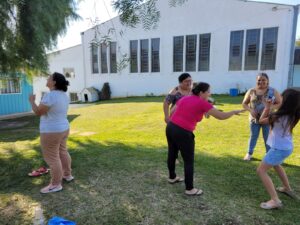
In Brazil, the implementation of the Toolkit on Nurturing Values and Spirituality in Early Childhood has created a meaningful impact not only on parents, caregivers, and children but also on the trainers and facilitators involved. At Pastoral da Criança, the Toolkit has become a transformative force, reshaping the way the organization supports families and helping to break harmful cycles of violence by promoting the spiritual development of children.
Developed by the Consortium on Nurturing Values and Spirituality in Early Childhood for the Prevention of Violence, the Toolkit was adopted by Pastoral da Criança to foster a more compassionate and respectful environment in the families. Both facilitators and participants left the workshops feeling empowered to apply its principles in their daily interactions with children.
One such facilitator, Priscila do Rocio Costa, recalls with a bright smile the story of a mother who, after completing the sessions, was able to break the cycle of violence rooted in her own childhood trauma. Through discussions centered on children’s dignity and the importance of nurturing, respectful, and open communication, this mother experienced a profound shift in her understanding of discipline. “Before, she believed that to discipline her son or daughter, she needed to spank them, to hit them. That was her understanding based on her own childhood. So, over the course of the meetings, especially toward the end, she shared that she no longer spanked. She would take a breath, talk with her husband, call the children, and have conversations,” Priscila shared.
This change marked not only a new way of disciplining, but also a deeper understanding of herself as a parent. The Toolkit helped her break the intergenerational cycle of violence, adopting a more peaceful, empathetic way to address conflict and guide her children’s development.
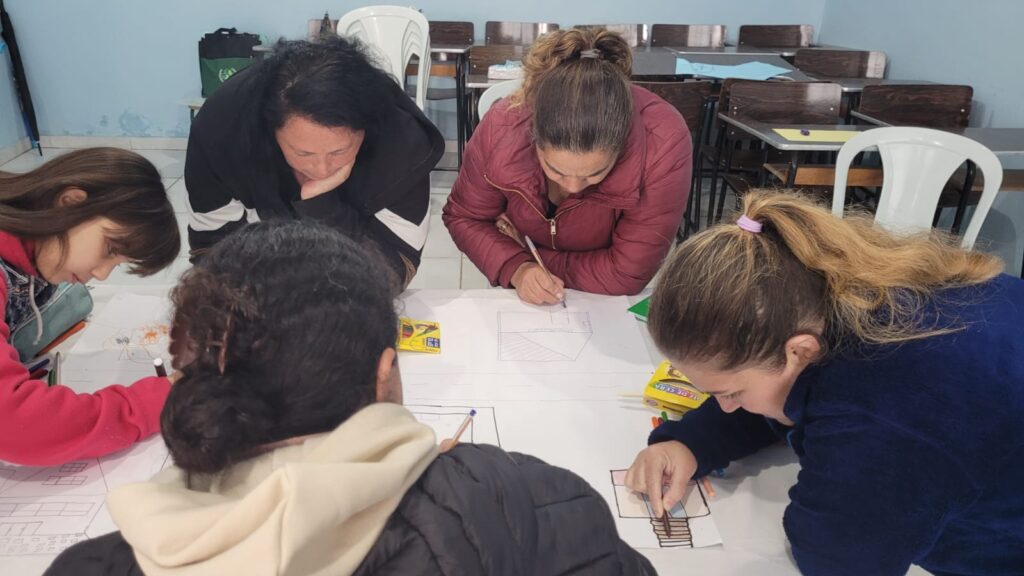
Another mother had a similar experience. She was struggling with her youngest son, who frequently threw tantrums and acted out. Before the Toolkit, her response was often violent. The sessions, however, helped her reconnect with herself, not just as a mother, but as an individual. “The project came right during this phase of his, and it helped me a lot to get to know myself as a person, as a mother, and to know how to handle situations where I felt desperate or in conflict with him,” she explained.
Throughout the sessions, she gained the tools and skills to better navigate moments of desperation and conflict, learning to stay calm and reflect before reacting. Over time, both she and her son became more peaceful. Her journey demonstrates how the Toolkit not only transforms parenting practices but also has a direct impact on children’s emotional well-being.
Facilitators themselves also experienced personal and professional growth. Josete Valim, described how the training reshaped her interactions with the families she works with at Pastoral. She now feels more confident and better equipped to support mothers in navigating challenges with their children. The training helped her approach families with more empathy and respect, creating an environment where parents feel safe sharing sensitive personal experiences. This understanding of their backgrounds allows her to help parents uncover the roots of their behavior and rebuild healthier, more trusting relationships with their children.
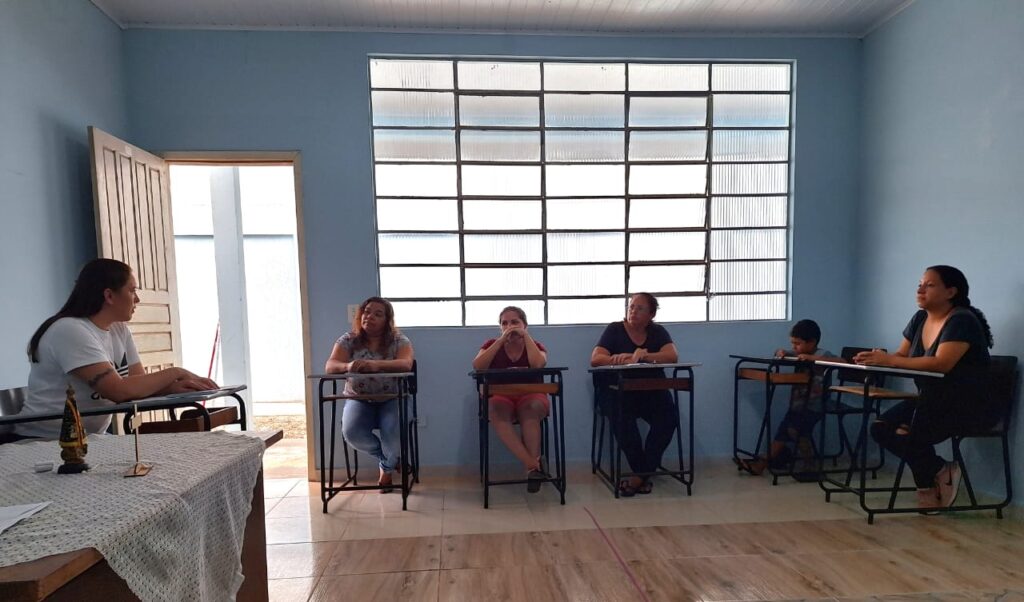
The Toolkit’s influence goes beyond individuals, it permeates organizational culture and practice. Maria das Graças Silva Gervásio, Coordinator of Pastoral da Criança, shared that the Toolkit offers more than theory: it provides a practical and experiential approach. “It helps the families, the people who participate directly in the sessions, to see how they behave, how they think, and they begin to change through the process. And as it includes a theoretical approach that can be adapted to reality, it enables not only personal transformation, but this transformation also has an impact on the community, on the family. And I think that is the greatest benefit of this Toolbox, because it enables this social transformation.”
For Maria, the Toolkit has transformed how her organization trains volunteers and engages with families. She is eager to expand its use in other communities, confident that it adds unique value to their work. What she values most, however, is the broader social transformation it enables—a sentiment echoed by Priscila, who shared, “The Toolkit transformed the whole family. The lessons from the meetings were taken home and helped create a welcoming, respectful environment.”
Ultimately, the Toolkit in Brazil is helping to break cycles of violence rooted in childhood trauma. Encouraging parents and caregivers to reflect on the causes and consequences of their actions promotes a different approach, one based on compassion, understanding, and the spiritual nurturing of the child. Its impact is not only personal or familial, but social, offering hope for a more peaceful future.
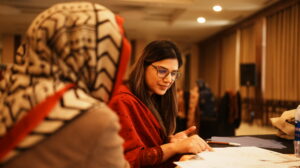
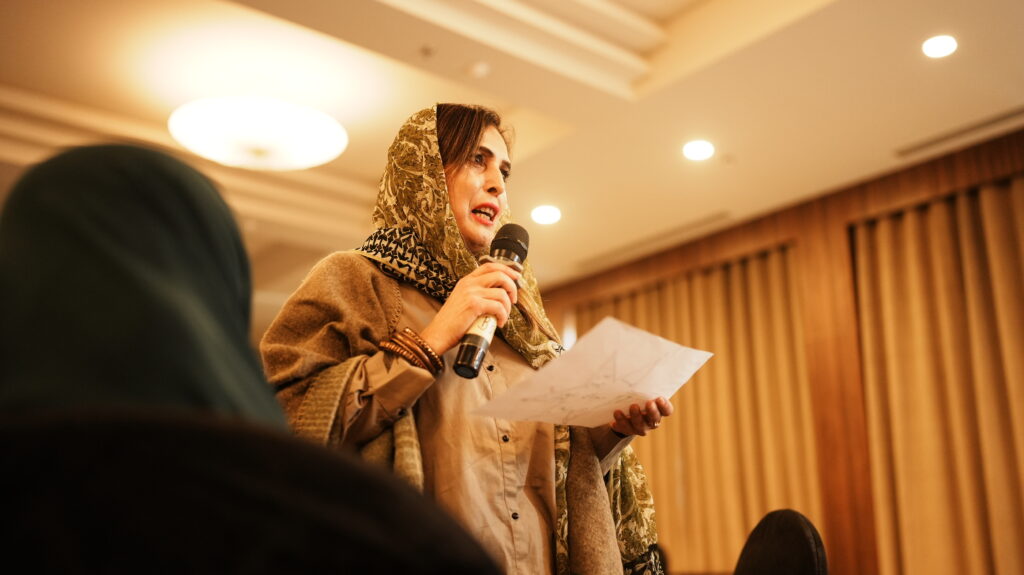
The Toolkit on Nurturing the Spiritual Development of Children in Early Childhood has had a profound impact in Pakistan since its implementation. Its transformative power shines through the reflections of faith leaders, facilitators, parents, and caregivers, each offering insight into how the Toolkit has positively contributed to their families and communities.
Parents experienced personal growth and deeper connections with their children. Facilitator Alina Afzal was particularly moved by the transformation she observed among widowed mothers. “Often marginalized by society while selflessly dedicating themselves to their children, these women experienced, for the first time, a profound connection with themselves,” she noted. “It gave them a renewed sense of strength and empowerment. They began to recognize their intrinsic value and worth.” Alina believes this awakening will lead to long-lasting benefits for both the women and their children, illustrating the Toolkit’s intergenerational impact.
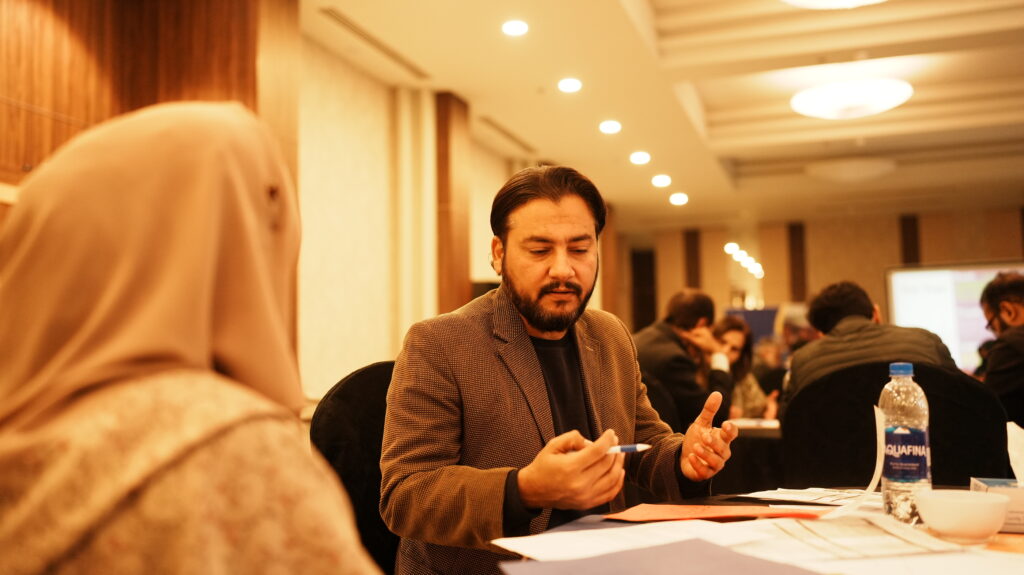
One mother shared how the training reshaped her relationship with her children. “I now understand how important it is to connect with my children in a compassionate and understanding way,” she said. Previously harsh and distant, she described how the Toolkit helped her recognize the harmful effects of violence and adopt a more nurturing approach. “Now, I speak to them calmly and try to explain things. As a result, they’ve started sharing more with me.”
This mother also spoke about newfound moments of connection, such as playing outside with her children, a simple yet meaningful action that helped build trust. Reflecting on her own growth, she shared, “I didn’t know how to handle things before, but now I feel calm and equipped.”
Faith leaders, too, experienced a shift in mindset. For Naeem ur Rehman, a local religious leader, the Toolkit was a turning point in his understanding of child abuse. “We weren’t paying enough attention to what children go through when they experience abuse,” he admitted. Inspired by the training, Naeem began promoting forgiveness and kindness as alternatives to harsh discipline, aligning his message with the values of his faith.
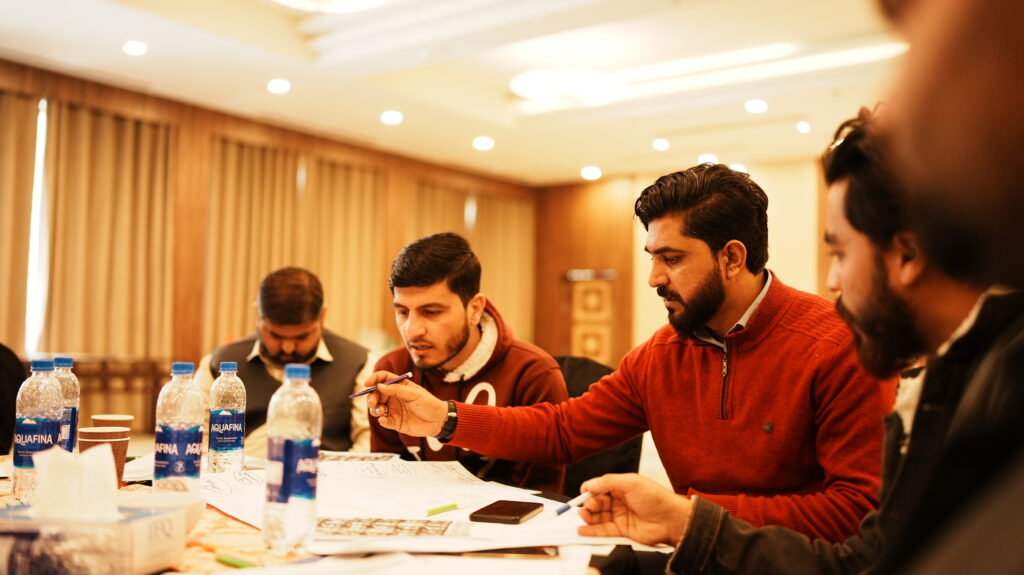
Naeem has since become an advocate against violence, using his platform to raise awareness in mosques, schools, and the wider community. He encourages parents and caregivers to reflect on their practices and adopt non-violent methods rooted in compassion and religious teachings. The Toolkit empowered him to move from passive observation to active intervention, becoming a voice for change.
For faith leaders like Naeem, the Toolkit offers a valuable framework to address child protection in a way that resonates with their beliefs. It not only supports their work but inspires them to challenge harmful norms and promote nurturing, non-violent parenting.
The Toolkit didn’t just impact children and the participants, but the organization itself. Shahnaz Kausar, Childcare Coordinator at Islamic Relief Pakistan, described the Toolkit as “not only impactful, but essential for every organization working for children.” Her endorsement underscores the Toolkit’s potential to transform the work of all those engaged in child development. “It goes beyond traditional programming,” she shared, “and plays a vital role in the lives of communities, especially those working for the well-being of children.”
Shahnaz also highlighted the inner transformation of children as one of the most remarkable outcomes. Beyond fostering awareness of safeguarding and protection, she and other facilitators observed children developing values like empathy, self-awareness, and compassion. “We witnessed an inner transformation grounded in values, along with the seeds of broader social change,” she explained. These values, deeply rooted in spiritual development, nurture a sense of responsibility and empower children to contribute positively to their communities.
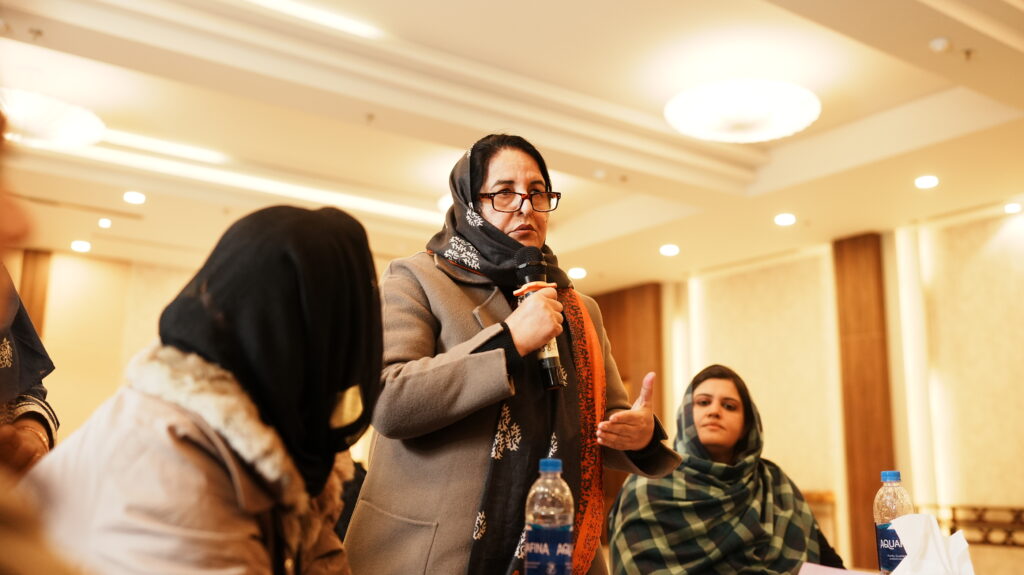
The positive impact of the Toolkit in Pakistan is undeniable. It has contributed to the prevention of violence against children and promoted their holistic well-being, with a particular emphasis on spiritual development. It has helped reshape parenting practices, strengthen family bonds, and empower children to trust and communicate more openly.
Individuals like Alina have found renewed purpose in advocating for child protection. As she powerfully stated, “It is crucial for all of us, as members of society, to speak up against violence and raise awareness. By doing so, we not only strengthen ourselves but also our communities.”
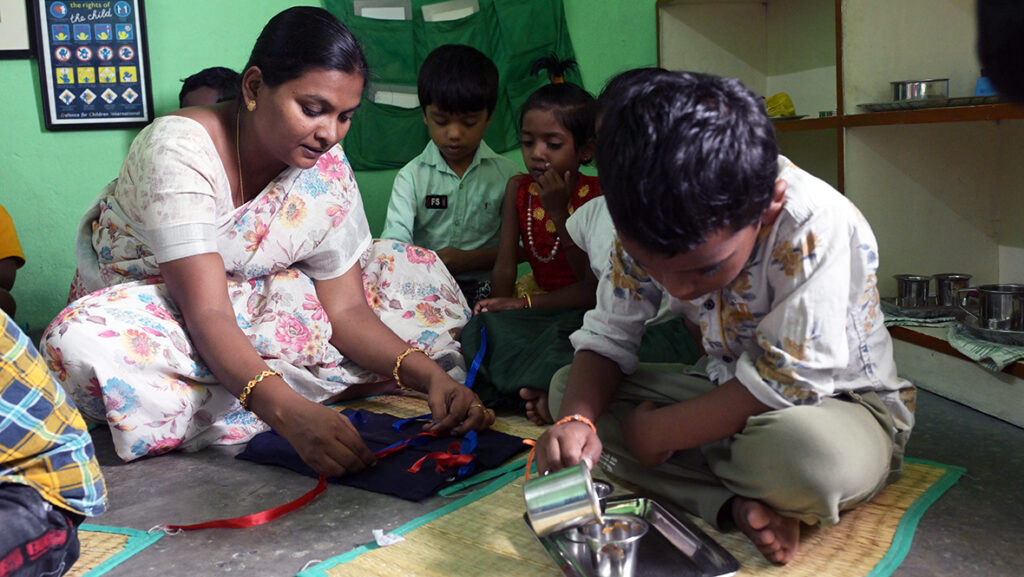
“My child became my friend in a new way. He started telling me everything… That’s one of the biggest benefits I’ve seen.”
– Parent, Tanzania
Across six countries, Brazil, India, Mexico, Pakistan, Sri Lanka, and Tanzania, a transformation is underway. Parents are becoming more patient, children are more peaceful and emotionally aware, and homes are safer, more nurturing places to grow and flourish.
At the heart of this movement is the Toolkit: Nurturing the Spiritual Development of Children in the Early Years, developed by the International Consortium on Nurturing Values and Spirituality in Early Childhood for the Prevention of Violence. Launched in November 2022, the Toolkit provides practical guidance for caregivers, educators, and faith actors to support children’s spiritual development while actively creating the conditions for their protection from violence and for the promotion of their holistic well-being.
Since its introduction, 279 trainers, facilitators, and educators have been trained on how to deliver training sessions and workshops with parents and caregivers. 1,860 parents and caregivers have participated in the workshops across all six countries, which benefited over 5,500 children.
From challenging cycles of violence and neglect to promoting resilience, empathy, and peaceful upbringing, the Toolkit is helping families reimagine parenting in ways that foster connection and understanding.
In Brazil, Pastoral da Criança incorporated the Toolkit into its Celebração da Vida program and adapted it for a mobile app to support home visits. Monthly workshops, held with the support of local universities, helped caregivers learn how to better connect with their children.
“With the knowledge I gained from the course, I am now more patient with my daughters… They no longer misbehave to get my attention, which helps avoid stress for both them and me,” shared a parent.
In Mexico, the implementation of the Toolkit is being led by the Franciscan Sisters and World Vision Mexico. It has been implemented in four states and integrated into “Escuelas para Padres” (Parents’ Schools) and parishes.
“My children have noticed the difference… Before, I used to get angry, but now I understand them better. I have more patience… I understand that they miss their mom, and I must fill that role,” said a widowed father from Veracruz.
Shanti Ashram integrated the Toolkit into their Bala Shanti program (Early Childhood Development Centres) across Coimbatore, serving families in nine villages characterized by multicultural and multireligious diversity. Parents and caregivers took part in Toolkit sessions that explored child rights and non-violent parenting. In communities where corporal punishment remains common, the shift was profound.
“I was repeatedly reminded not to beat or threaten my child… It made me reflect on the times I had done so, and I decided to change,” shared one of the mothers. “My son used to hit others, but now he no longer fights. He speaks with respect… As a mother, this makes me incredibly happy,” she added, noting how her transformation made an impact in her child’s behaviour.
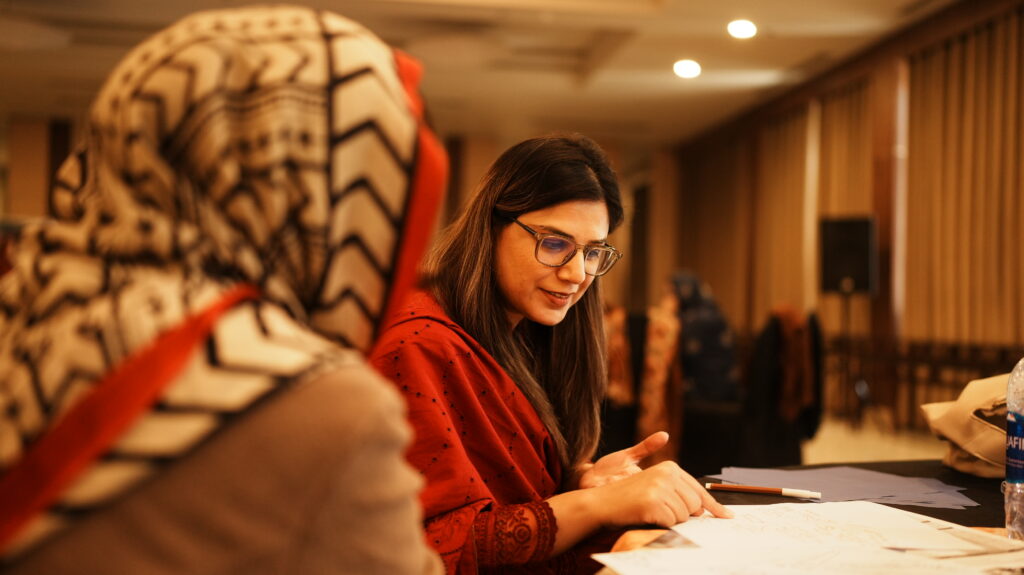
Echoing this sentiment, a mother in Pakistan said, “After taking the training—Masha Allah—it brought a big change in me. I realised that yelling and fighting doesn’t help. It negatively affects the child’s mental health.”
Islamic Relief spearheaded the program in Pakistan, reaching both urban and rural areas through intensive sessions and remote follow-ups. The experience empowered caregivers in meaningful ways. “The widowed women… felt marginalised by society while dedicating themselves to their children. For the very first time, they experienced a profound connection with themselves… They began to recognise their intrinsic value and worth,” noted Ms. Alina Afzal, Assistant Child Care Officer at Islamic Relief Pakistan, and trainer of the Toolkit.
The Sarvodaya Movement in Sri Lanka integrated the Toolkit into pre-schools and community kitchens, complementing nutrition programs with emotional and spiritual development.
“While we often get frustrated with our children’s behaviour, this workshop helped me understand how to manage and balance those emotions… It also helped me teach my child about spirituality,” said a preschool teacher.
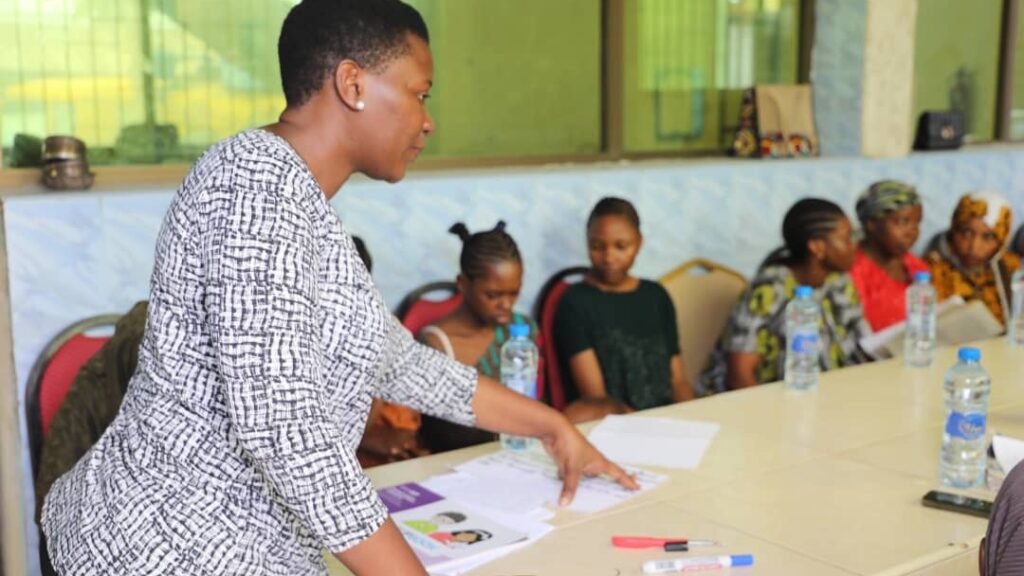
Four faith-based organizations—including the Baha’í, Shia and Mennonite communities, and Ladies Joint Forum—began sessions in mid-2024 in Tanzania. The change was immediate and deeply felt.
“I wasn’t close to my son. But after joining this program, something amazing happened. He started telling me everything—what he experiences at school and in the neighborhood. That’s one of the biggest benefits I’ve seen. This program brought real change,” shared a mother.
The Toolkit has demonstrated that protecting children starts with building peace at home. When parents gain the tools to listen, reflect, and respond with love, families flourish, and so do children.
Beyond behavioral change, participants report deeper emotional bonds, greater confidence, and an increased sense of self-worth. In every setting, the Toolkit’s flexible design has made it adaptable to diverse cultures, languages, and traditions, affirming the universal need to protect and nurture childhood.
We extend our heartfelt thanks to the Fetzer Institute, Porticus North America, and Smart Peace for believing in the power of early childhood development rooted in values and spirituality.
We also deeply thank all the Consortium member organizations for their unwavering collaboration, dedication, and commitment to children’s well-being.
Learn more about the Consortium and it’s work, here: https://childspiritualdevelopment.org/
Cada 22 de abril se conmemora el Día de la Tierra con el fin de concienciar a la ciudadanía de todo el mundo sobre la importancia de tomar medidas para proteger la biodiversidad del planeta, reducir la contaminación y promover un equilibrio que asegure la supervivencia de todas las especies.
En la actualidad, el cambio climático y las acciones humanas que amenazan la biodiversidad, como la deforestación, el comercio ilegal de vida silvestre, la ganadería intensiva, el cambio del uso del suelo… representan los mayores desafíos para el futuro de la humanidad y del resto de especies.
Así pues, la Dra. Jane Goodall ha querido aprovechar esta ocasión para compartir un mensaje para hacernos reflexionar sobre cómo podemos contribuir a salvar el planeta Tierra, nuestro único hogar:
«Hay un mensaje muy importante que quiero compartir en este Día de la Tierra 2025: os pido a tod@s que tratéis cada día del año como si fuera el Día de la Tierra. El planeta Tierra es el único hogar que conoceremos jamás y, sin embargo, lo estamos dañando sin descanso. Estamos destruyendo bosques, selvas, humedales, turberas, sabanas, praderas y muchos otros ecosistemas que ni siquiera he mencionado. Estamos contaminando ríos, lagos y océanos. Estamos emitiendo gases de efecto invernadero que provocan el aumento de las temperaturas, lo que a su vez cambia los patrones climáticos y genera más huracanes, tifones, inundaciones, sequías, olas de calor e incendios forestales que pueden destruir nuestros hogares. Estamos en medio de la sexta gran extinción de especies animales y vegetales.
Si a todo esto le sumamos el hecho de que cientos de miles de personas están sufriendo por la guerra, la pobreza y la discriminación, no es de extrañar que cada vez más gente esté perdiendo la esperanza. Entonces, me preguntan si de verdad tengo esperanza en nuestro futuro. Pues sí, creo que aún hay una ventana de tiempo en la que podemos, al menos, frenar el cambio climático y la pérdida de biodiversidad. Pero solo si nos unimos y actuamos ahora. Sin esperanza, caeremos en la apatía y no haremos nada. Y entonces sí estaremos perdidos.
Dejadme que os comparta mis razones para la esperanza, y creo que much@s de vosotr@s ya las conocéis.
La primera son l@s jóvenes. En todas partes, cuando comprenden los problemas y se sienten empoderados para actuar, se enfrentan al desafío. Nuestro movimiento Raíces y Brotes, que ya está presente en 75 países, está creciendo rápidamente y cuenta con jóvenes de todas las edades. Ell@s están marcando una verdadera diferencia, muchas veces influenciando a sus padres y madres, abuel@s, docentes y amig@s.
En segundo lugar, la naturaleza es asombrosamente resiliente. He visto muchos lugares que habíamos destruido por completo y que, con el tiempo –y a veces con un poco de ayuda (de Raíces y Brotes, en muchos casos)–, la naturaleza se ha logrado recuperar. Escribí un libro sobre animales al borde de la extinción que han tenido una segunda oportunidad, gracias a personas decididas a que no desaparezcan. Personas que demuestran ese espíritu indomable, enfrentando desafíos que parecen imposibles… y logrando superarlos.
Y luego está nuestro maravilloso intelecto humano. L@s científic@s están desarrollando tecnologías que nos permiten vivir en mayor armonía con la naturaleza, como las energías alternativas.
Quizás estéis pensando: ¿y eso qué tiene que ver conmigo?, ¿qué puedo hacer yo? Y os digo que, cada día que vivís, tenéis un impacto en el mundo y podéis elegir qué tipo de impacto queréis dejar. Podéis acordaros de apagar las luces. Tal vez podáis caminar o ir en bicicleta, o coger el tren o el autobús en vez de usar el coche. Podéis pensar en lo que compráis: cuando se fabricó ¿ese producto dañó al medio ambiente?, ¿fue cruel con los animales?, ¿es barato por salarios injustos? Entonces buscad un producto producido más éticamente. ¿Costará más? Probablemente sí, pero lo valoraréis más y desperdiciaréis menos. Y hoy en día, el desperdicio es un gran problema.
Y algo más, muy importante: podéis adoptar una dieta basada en vegetales. En parte, porque eso reduciría enormemente el sufrimiento de los miles de millones de animales hacinados en granjas industriales, pero también porque se destruyen enormes áreas de hábitat para cultivar alimento que se destina al ganado. Se necesita muchísima agua para transformar la proteína vegetal en proteína animal, y estos animales producen metano durante la digestión, un gas de efecto invernadero muy virulento. Además, es una opción más saludable para nosotr@s.
Millones de personas reflexionando sobre su propia huella ambiental pueden marcar una enorme diferencia y contribuir en gran medida a sanar a la Madre Tierra. Y recordad que dependemos del mundo natural para tener comida, agua, para todo. Así que, por el bien de nuestr@s hij@s y de todas las generaciones futuras, por favor, empecemos hoy. No solo en este Día de la Tierra 2025, sino todos los días que están por venir.
Gracias».
Dra. Jane Goodall
Fundadora del Instituto Jane Goodall
Mensajera de la Paz de las Naciones Unidas
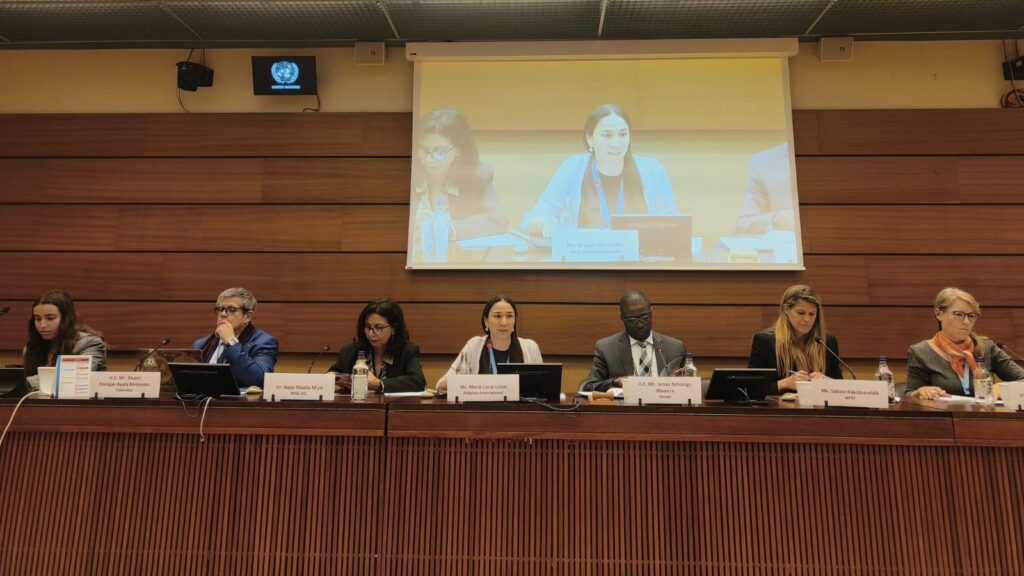
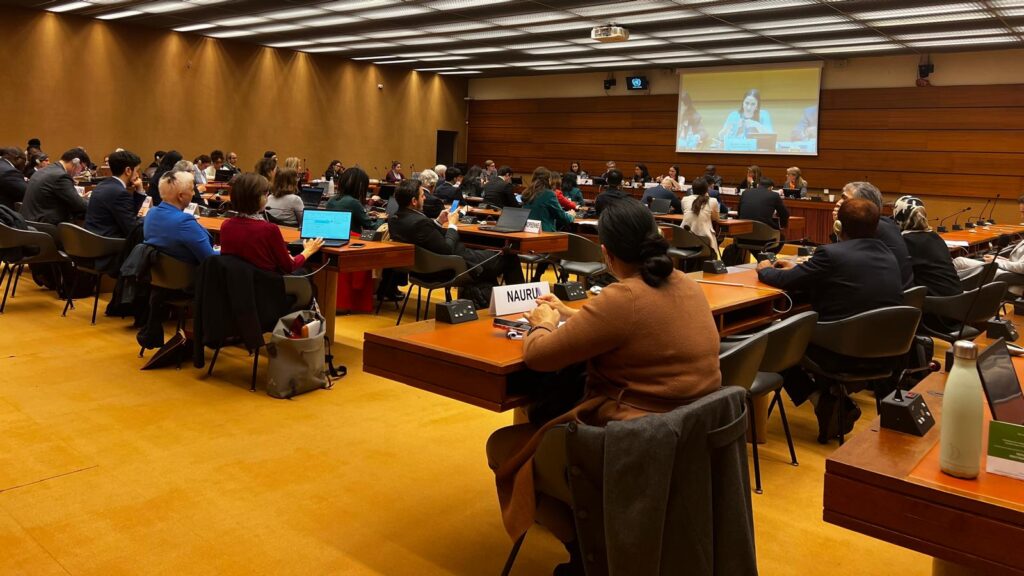
Geneva, 13 March 2025 – A high-level side event at the 58th session of the Human Rights Council brought together around 140 participants, both online and in person, including representatives from 24 Permanent Missions to the UN in Geneva. Organized by the Child Rights Connect Working Group on Children and Violence, in collaboration with Arigatou International, Lumos, Plan International, Terre des Hommes, the United Nations Office on Violence against Children, the World Health Organization (WHO), and World Vision International, the event reinforced the urgent need for sustained accountability and action to end violence against children. The event was co-sponsored by the Permanent Missions of Kenya, Colombia, and Canada to the United Nations in Geneva.
The discussion was built on the momentum generated by the Global Ministerial Conference in Bogotá (2024), where over 120 governments pledged to end violence against children. Panelists stressed the need to translate these commitments into real, measurable change.
Ms. Maria Lucia Uribe, Executive Director of Arigatou International – Geneva, moderated the panel and set the tone for the discussion, referencing a powerful message delivered by children at the Annual Day on the Rights of the Child: “We have heard from you, but sometimes what you promise is change, and the promises don’t get fulfilled.” She emphasized the need for collaboration between states, organizations, and civil society to hold governments accountable.
International human rights mechanisms are instrumental in ensuring accountability, but panelists stressed that true progress requires cooperation across sectors. H.E. Ambassador Álvaro Ayala, Deputy Permanent Representative of the Republic of Colombia, highlighted this by recalling his country’s legislative progress, stating: “Colombia has taken a decisive step toward breaking the harmful cycle of violence. In 2021, law 2089 was enacted explicitly to prohibit the use of corporal punishment, the elimination of degrading treatment, and any form of violence as a method of correction or against children or adolescents.”
A powerful moment in the event was the participation of six children from Colombia, Ecuador, Kenya, and Nepal, actively involved in Ending Violence Against Children (EVAC) initiatives. They shared their perspectives through video messages, highlighting the urgent need for governments and institutions to uphold their commitments. Their voices added depth to the discussion, reinforcing that children must not only be heard but also meaningfully involved in decision-making processes. Jaskiran from Kenya spoke about the importance of tackling cyberbullying and digital safety, calling for “immediate responses to cyberbullying cases so that delays don’t perpetuate violence.” Similarly, Chetan and Sahadip from Nepal called for meaningful youth participation: “Governments should organize meetings where children and young people can share their ideas and help plan actions to meet international commitments. Our voices matter in saving the future.”
Dr. Najat Maalla M’jid, Special Representative of the UN Secretary-General on Violence Against Children, stressed: “We need to translate [commitments] into action quickly (…) and we need to make sure that we have children on board.” Echoing this, H.E. Ambassador James Ndirangu Waweru, Deputy Permanent Representative of the Republic of Kenya, pointed out the cultural shift needed to protect children: “Corporal punishment was once normal. Today, if you attempt it in Kenya, you will find yourself as a guest of the state—not in the State House, but in prison, because punishment has been prohibited.”
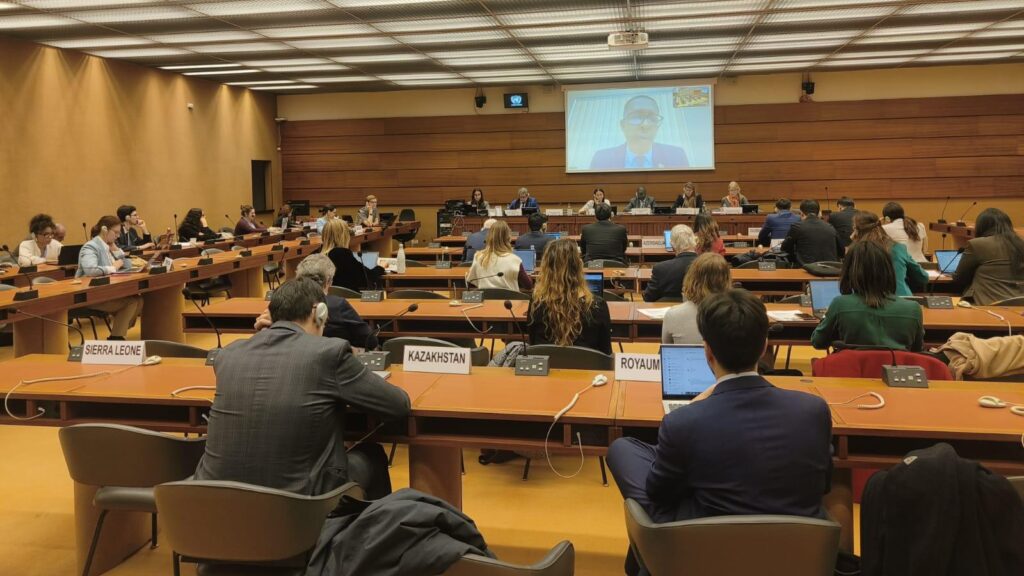
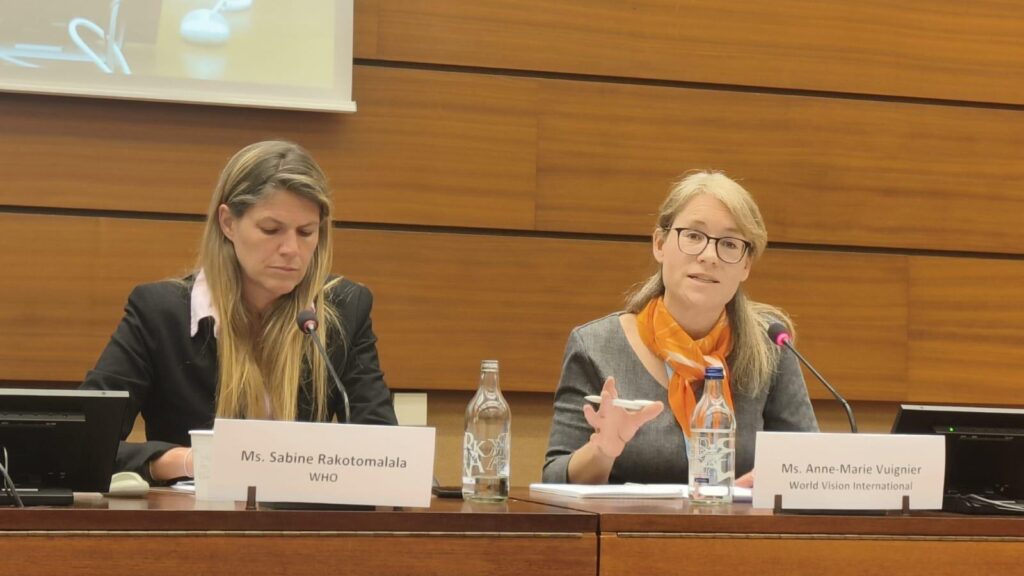
Concrete steps toward accountability were outlined. Professor Benyam Dawit Mesmur, Member of the UN Committee on the Rights of the Child, highlighted the need for focus on both emerging issues like cyberbullying and longstanding threats such as corporal punishment. Meanwhile, Ms. Sabine Rakotomalala, Senior Technical Officer at WHO, announced a digital dashboard to track country commitments, a one-stop platform to monitor pledges, policies, and progress—ensuring transparency and accountability at every step.
The event ended with a call to turn words into action. Ms. Anne-Marie Vuignier, UN Representative for Geneva at World Vision International, stressed: “Pledges without action are just words.” The discussion underscored that ending violence against children is not just a long-term goal—it is an immediate necessity. Moving forward, participants called for stronger political will, financial investment, and sustained collaboration to protect every child, everywhere. Final statements were made by representatives from Canada and Mexico, reaffirming their countries’ commitments and progress to ending violence against children, including cross-sector efforts on positive parenting and violence-free schools.
The post Ensuring Accountability and Action: Side Event at the 58th Human Rights Council Highlights Urgent Need to End Violence Against Children appeared first on Ethics Education for Children.
Human Rights Council 58th session
Annual Discussion on the Rights of the Child
(HRC res. 7/29 and 55/29)
13 March 2025
Statement delivered by Ms. Emma Nowotny, Child Rights Program Officer, Arigatou International – Geneva
Arigatou International welcomes the discussions on child rights and early childhood development, and the important views and recommendations that children shared.
According to WHO, six in ten children under five experience physical or psychological violence from caregivers. This perpetuates cycles of abuse, but evidence shows that supporting parents, promoting positive parenting, challenging harmful norms, and strengthening legal protections can foster healthy child development.
In line with General Comment No. 7 (2005), we call for a holistic approach to child development interventions to ensure access to health, nutrition, early education, protection from violence and neglect, and the meaningful participation of children. Strengthening these foundations is critical to lifelong well-being, inclusion, and the prevention of violence against children.
We call on governments, decision-makers, and civil society to:
Today’s education gaps, growing mental health crises, and rising narratives of exclusion and hate threaten children’s dignity, safety, and sense of belonging. These realities underscore the urgent need to nurture children’s holistic well-being as a pillar of resilience and social cohesion.
To conclude, we urge all States and organizations to adopt multi-sectoral approaches, fostering collaboration beyond silos to create effective mechanisms for child protection and empowerment.
The post Statement at the 58th Session of the Human Rights Council – Annual iscussion on rights of the child appeared first on Ethics Education for Children.
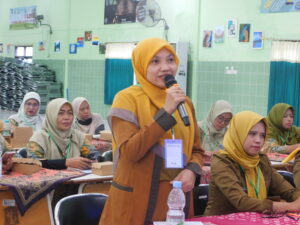
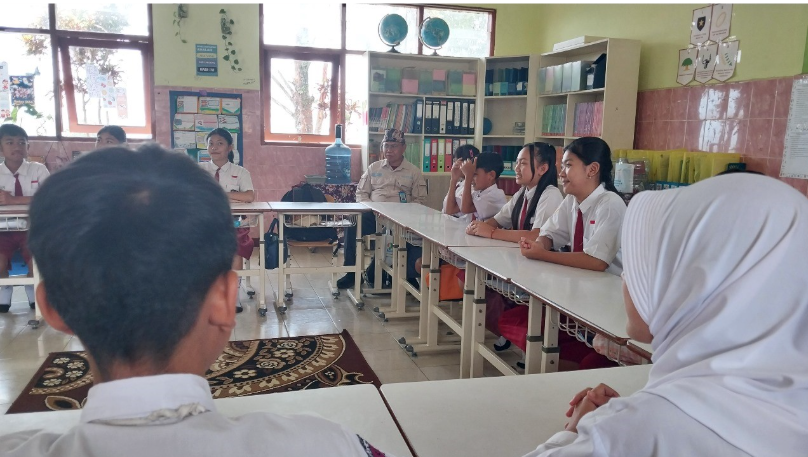
The Ethics Education Fellowship is transforming classrooms, empowering students, and contributing meaningfully to Indonesia’s Pancasila Student Profile (P5). At the forefront of this movement are the Fellows, organizing training workshops, practical guides, and online modules to support teachers in integrating ethics education into everyday learning.
Launched in 2022 by Arigatou International, the Guerrand-Hermès Foundation for Peace, KAICIID, the Higher Committee of Human Fraternity, and UNESCO, the Fellowship has reached thousands of students across six countries. In Indonesia, its second phase began in October 2024, aiming to scale its impact and build sustainable structures for ethics education across the nation.
The second phase of the Fellowship in Indonesia now includes 574 schools and is expected to reach over 90,688 students, a tenfold increase from its initial reach. Workshops, online learning, and collaborative meetings have empowered hundreds of teachers to implement transformative approaches. Technology and digital tools have also enabled the program to reach more remote and underserved areas, ensuring equitable access.
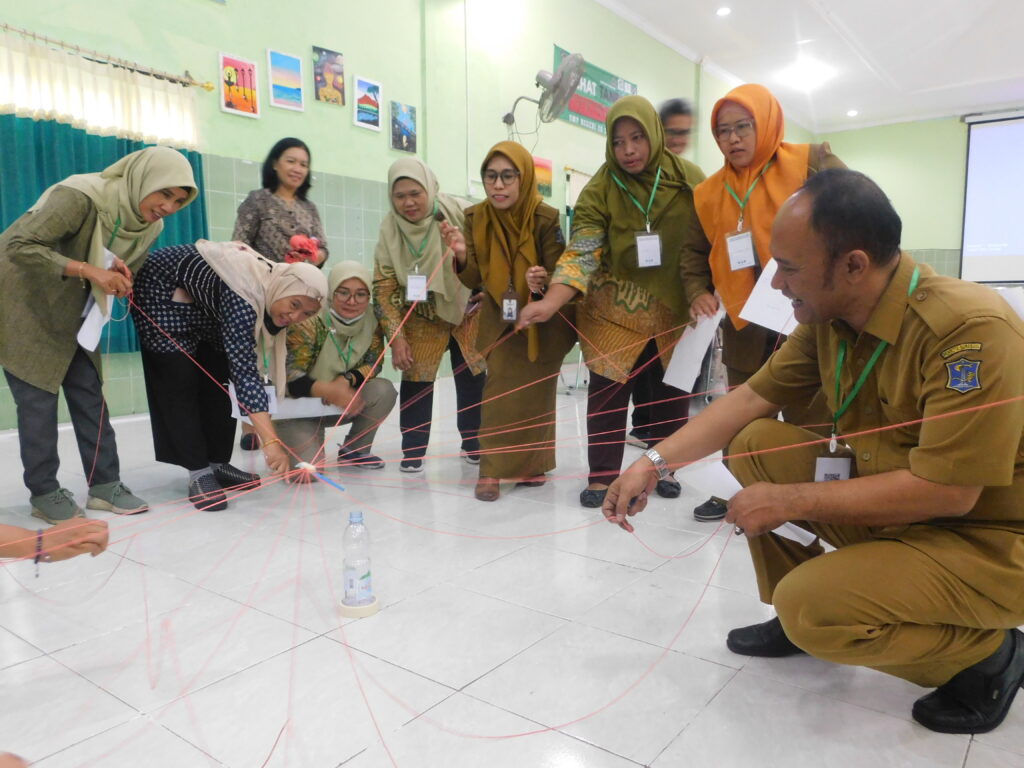
With support from the Ministry of Education and the National Commission for UNESCO, Indonesia has embedded ethics education within its education goals, aligning it with the Pancasila Student Profile. The Ethics Education Fellowship complements the P5 project by providing teachers with the skills, tools, and mindset needed to nurture holistic learners, students who are not only academically competent but also morally grounded and socially responsible.
A visit to Torongrejo School highlighted this integration in action. Through classroom observations and interviews with teachers, students, and administrators, it was evident that the combination of ethics education training and P5 implementation had elevated the school’s ability to foster ethical reflections. Classrooms became more inclusive, learning was more collaborative, and the school community more connected.
Educators across the participating schools reported a marked shift in classroom dynamics following the integration of ethics education. Students are showing increased openness, empathy, and collaboration, especially among those from different religious, cultural, and socioeconomic backgrounds. Teachers have observed stronger bonds of solidarity, mutual respect, and a sense of shared responsibility for the well-being of others.

Many students are also taking greater initiative in solving classroom and school-wide challenges. Teachers report that children now listen more attentively to each other, offer support to peers with special needs, and engage more actively in shaping group norms and class agreements. As one teacher noted, “We no longer just teach ethics; our students are living it.”
The transformation hasn’t been limited to students. Teachers themselves describe their relationships with students as becoming more open and respectful. Many report a renewed passion for teaching, enjoying more participatory, student-centered lessons and creating classroom environments that feel safe and inclusive.
“Ethics education offers many benefits, particularly in creating a child-friendly learning environment,” said Mrs. Nunung Herawati, a participating teacher. “It’s not just about what we teach, but how we teach, focusing on the process and respecting the dignity of every learner.”
Mrs. Oni Arlitasari echoed this sentiment, saying, “Through the training, I learned how to integrate children’s rights into the learning process and ensure they are respected and fulfilled.”
One of the most tangible and inspiring outcomes of the Fellowship has been the growth of environmental character development projects in schools. These initiatives empower students to turn lessons into action.
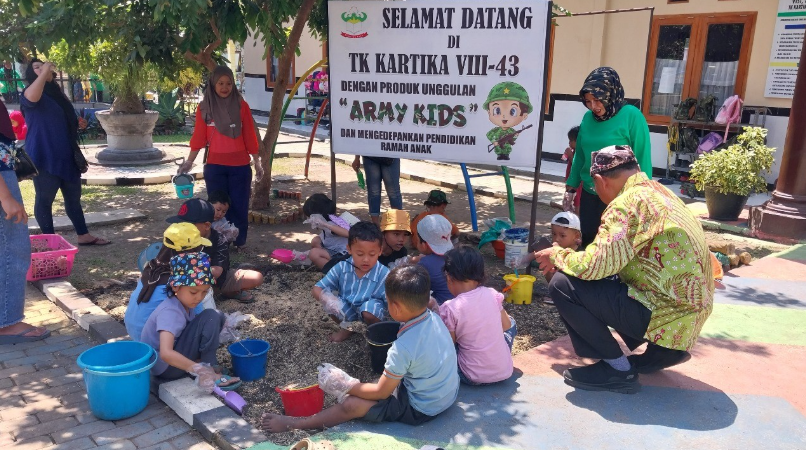
Schools are cultivating land to grow vegetables, fruits, and legumes, often transforming unused spaces into school gardens. These gardens not only strengthen students’ sense of responsibility and connection to nature but also deliver economic benefits. Produce is sold directly or turned into ready-to-eat snacks for resale, generating income for school activities.
Waste management has also taken center stage. Students sort and process waste into compost or craft materials. These projects give students hands-on experience with sustainability while deepening their understanding of ethical choices in the real world.
In March 2025, the Ministry of Education convened a final evaluation workshop, bringing together educators, policymakers, and civil society actors to reflect on successes and chart a course for the future. The session reinforced a collective commitment to institutionalize ethics education as a cornerstone of national character development.
By putting ethics at the heart of education, Indonesia is contributing to building peaceful, inclusive societies and advancing SDG Target 4.7, which calls for education that fosters global citizenship, sustainability, and human rights.
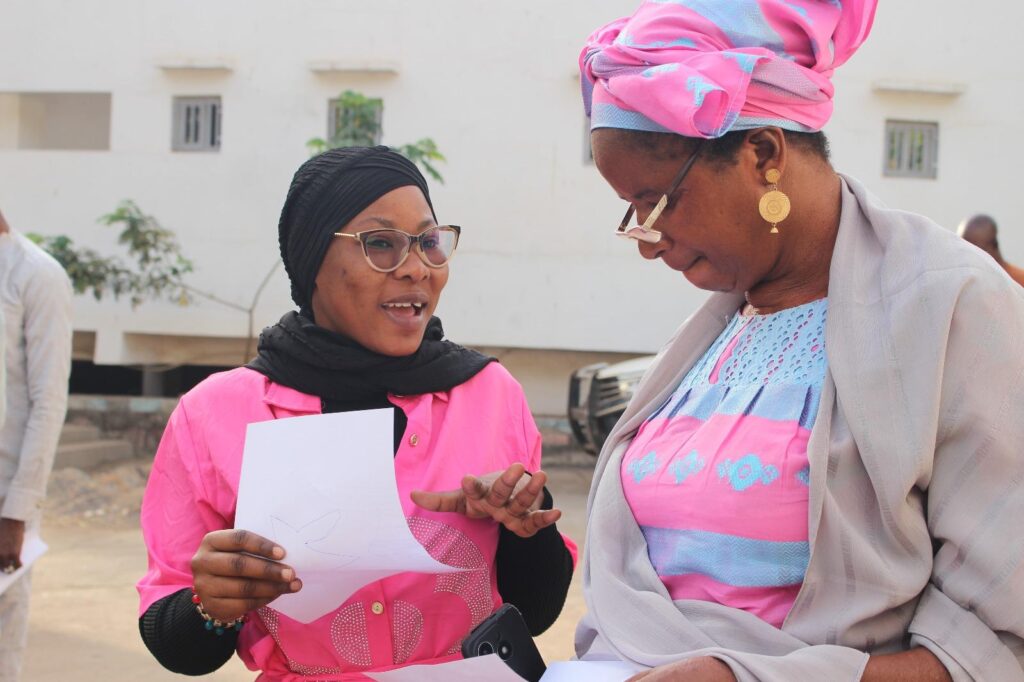
A training of trainers workshop was held in Bamako, Mali, from 3 to 7 March 2025, under the theme: “Creating Safe, Favorable, and Resilient Learning Environments to Protect Children’s Right to Education in Times of Conflict and Crisis.” The workshop brought together 28 educators, teacher trainers, and school leaders from across the country to strengthen their ability to foster safe, inclusive, and supportive classrooms—even amid conflict and crisis.
Facilitated by Ms. Eleonora Mura, Senior Expert on Ethics Education at Arigatou International – Geneva, the workshop is part of a broader regional initiative led by UNESCO-IICBA, UNESCO Mali, and the Ministry of Education of Mali, with support from the Government of Japan. The initiative is also being implemented in Burkina Faso, the Central African Republic, South Sudan, Chad, and Niger.
Throughout the five-day training, participants engaged deeply with transformative pedagogy approaches that integrate peacebuilding, gender-responsive practices, and mental health and psychosocial support (MHPSS). The workshop emphasized learner-centered strategies aimed at safeguarding children’s well-being and promoting resilience in their educational journeys. “I find the transformative pedagogy approach very relevant to mobilize the knowledge and competencies of learners and to co-develop learning opportunities in the classroom,” shared one participant, reflecting the collective enthusiasm for practical tools that respond to students’ needs.
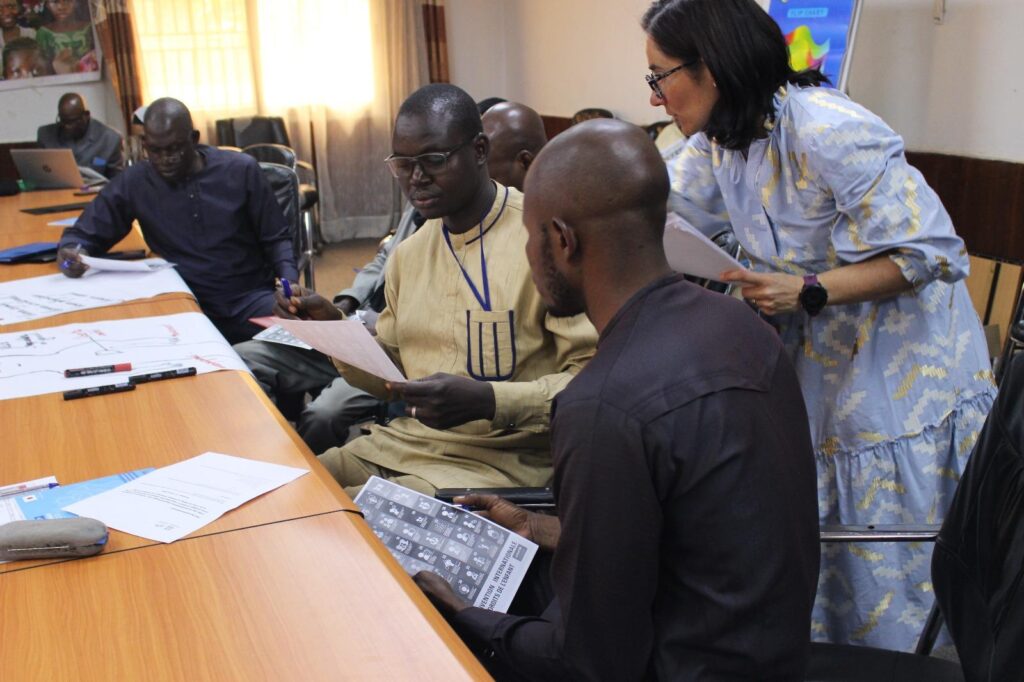
Participants also recognized transformative pedagogy as a powerful tool to improve communication and build learners’ confidence.“One thing I learned during this workshop is that transformative pedagogy can be used by teachers to boost students’ confidence,” said one educator. Another added, “This workshop helped me understand how improving communication with learners is key—not just for solving problems, but also for fostering honest dialogue and meaningful exchanges in the classroom.”
Participants explored concrete strategies for creating safe school environments and for training others in their communities. This effort lays the groundwork for a national network of empowered educators who can expand the reach and impact of this training across Mali.
A particularly moving moment came when one participant shared: “Particularly as we live in a situation of war that has been imposed on us, we can use what we learned in this workshop to bring peace to our schools.”
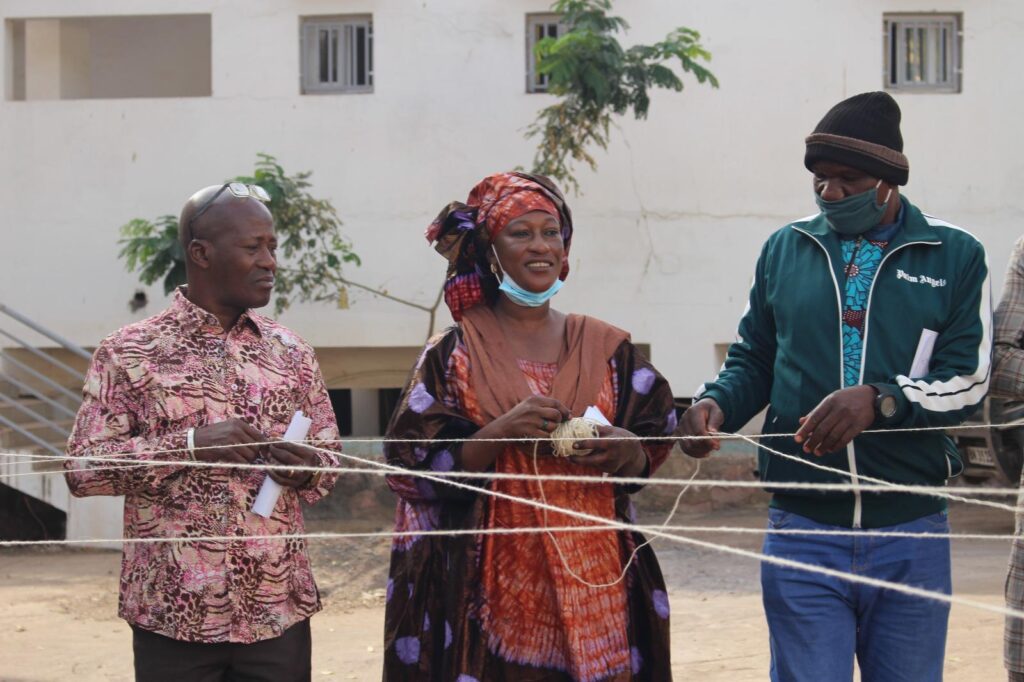
As Mali continues to face immense challenges, this initiative stands as a powerful testament to the resilience of its educators and their unwavering commitment to children’s right to education. The workshop represents an important step toward peace, empowerment, and educational transformation in the region.
Arigatou International – Geneva is honored to contribute to this initiative. We extend our heartfelt thanks to our partners for recognizing the impact of our pedagogical approach and for entrusting our team to lead this Training of Trainers workshop.
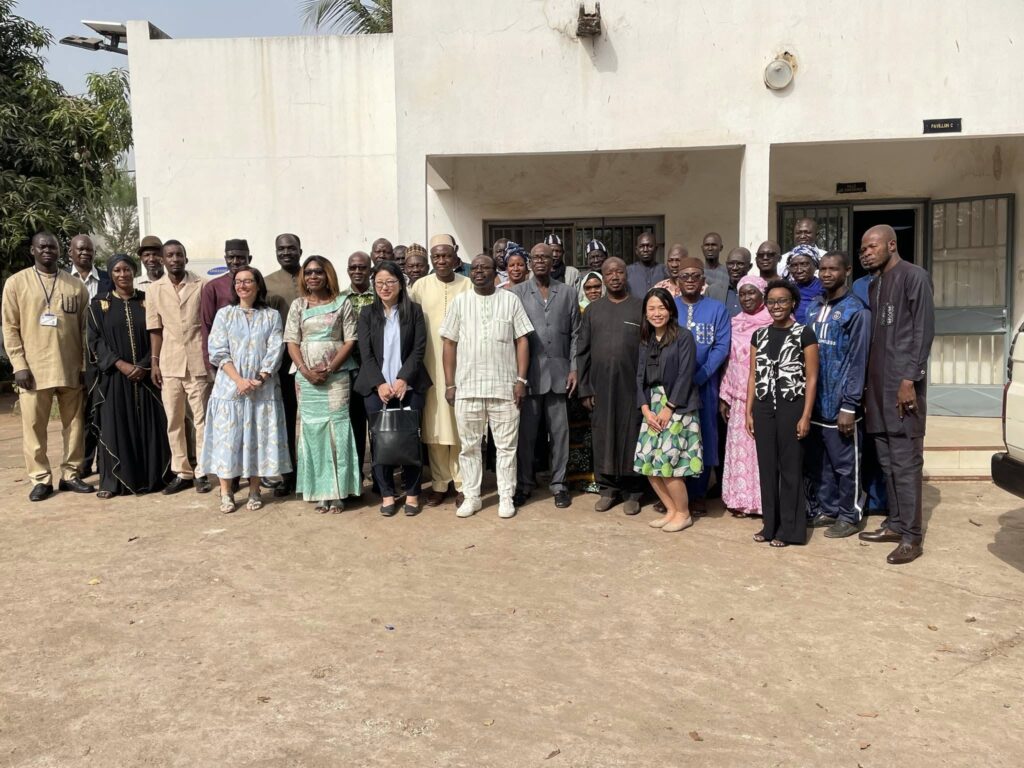
The post Empowering Educators in Mali: A Workshop to Build Safe and Resilient Learning Environments appeared first on Ethics Education for Children.
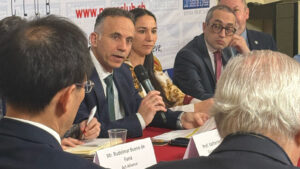
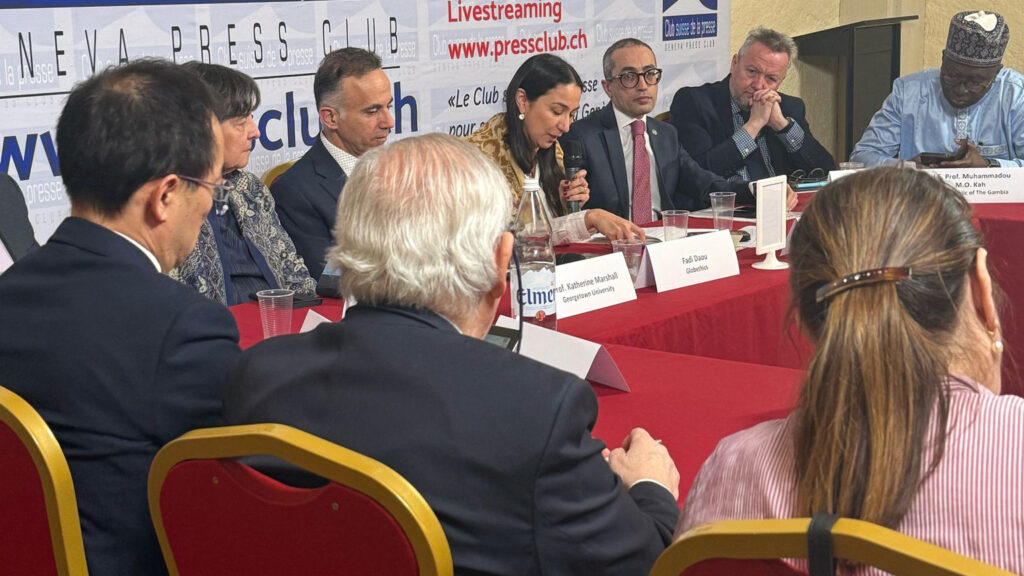
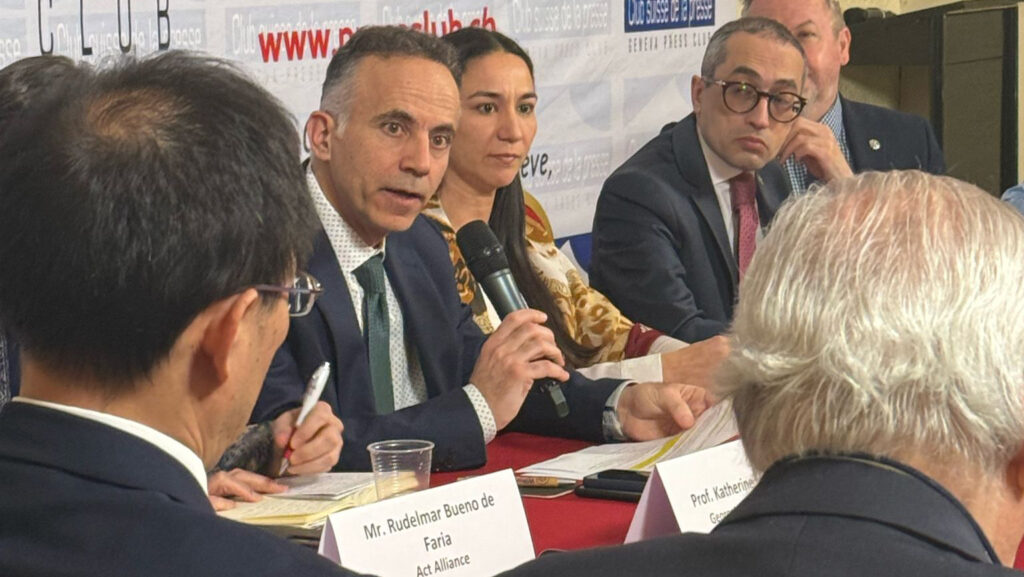
On March 5, Arigatou International and Globethics hosted a roundtable discussion at the Geneva Press Club, bringing together key stakeholders to address the ethical challenges and strategic responses to the ongoing funding crisis in the humanitarian and development sectors.
The event, Navigating the Development and Humanitarian Funding Crisis: Ethical Implications and Strategic Responses, gathered representatives from CSOs, UN agencies, diplomats, and humanitarian experts to discuss the far-reaching consequences of budget cuts and shifting donor priorities. As major donors, including the USA, Germany, Switzerland, and the UK, have significantly reduced their contributions to global aid, participants examined how to uphold ethical standards while ensuring the protection of vulnerable populations.
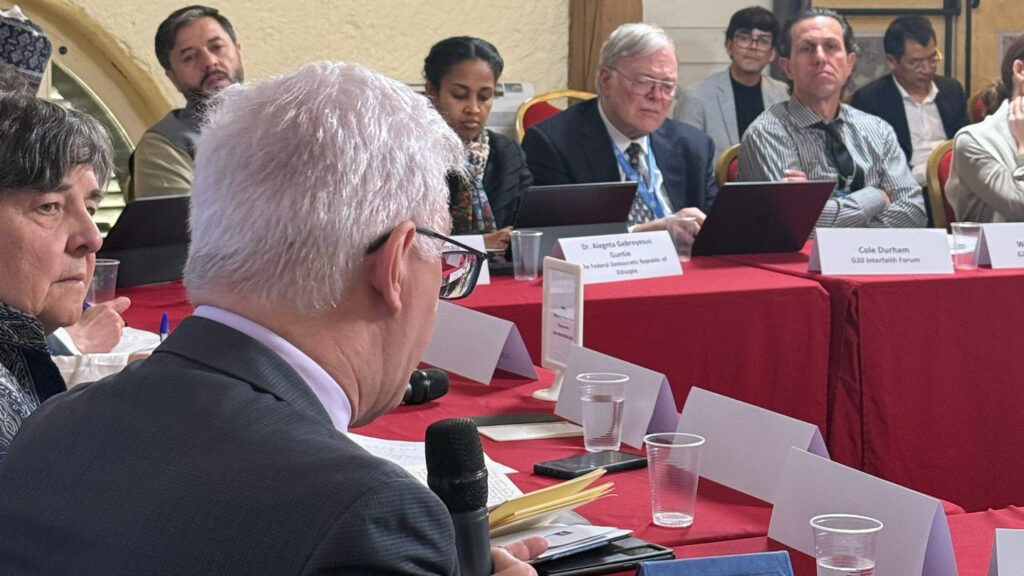
A key takeaway from the discussion was the urgent need to rethink funding models. With traditional aid structures proving unsustainable, experts emphasized the importance of diversifying financial sources, engaging private sector stakeholders, and strengthening local solutions to build long-term resilience. The conversation also underscored the necessity of balancing immediate humanitarian responses with sustainable development strategies to prevent long-term setbacks in human rights and peacebuilding efforts.
Collaboration emerged as another critical theme, with speakers calling for collective action rather than competition for scarce resources. The discussion highlighted the ethical responsibility of humanitarian and development actors to maintain transparency, accountability, and commitment to their core missions despite financial pressures.
The roundtable concluded with a strong call for bold, collective action to ensure that ethical principles remain at the heart of humanitarian efforts. As the crisis deepens, innovative financing, stronger partnerships, and a commitment to human rights will be essential in shaping the future of global aid.
For a full summary of the discussion, read the Geneva Press Club’s press release here: Press release “Navigating the Development and Humanitarian Funding Crisis”
The post Arigatou International and Globethics Lead Roundtable on Navigating the Development and Humanitarian Funding Crisis appeared first on Ethics Education for Children.
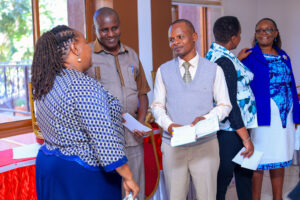
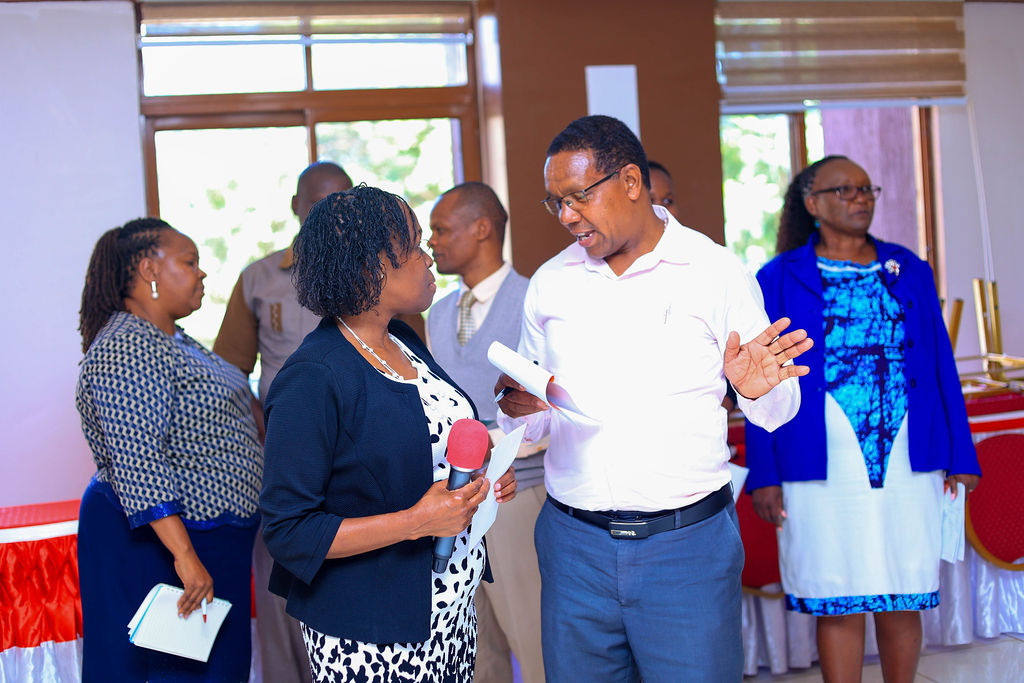
A training workshop took place on the outskirts of Nairobi, from 26 February to 2 March 2025, bringing together 32 educators from Kitui and Murang’a counties. Jointly organized by the Ministry of Education of Kenya, the Kenya National Commission for UNESCO, and the Kenya Institute of Curriculum Development, this workshop is a key component of the second phase of the Ethics Education Fellowship. It is expected that in this phase, the program will reach 800 children across four schools.
The participants, representing primary and secondary schools, teacher training colleges, and universities, were joined by key officials from the Ministry of Education, Kenya, including the Department of Teacher Education, Department of Planning, Department of Quality Assurance, and the Department of Partnerships and East Africa Affairs. The workshop was also attended by representatives from the Kenya National Cohesion and Integration Commission, the Kenya National Commission on Human Rights, and the Inter-Religious Council of Kenya.
Mr. Elyas Abdi, Director General of Basic Education, Ministry of Education, emphasized the foundational role of ethics and values in national development. “Kenya will achieve development by embracing values and ethics, which are key to building a better future,” he affirmed in an interview with MyGob newspaper. He underscored the alignment of this initiative with Kenya’s Vision 2030 and Sustainable Development Goal 4.7, which promotes education that fosters peace, global citizenship, and cultural understanding.
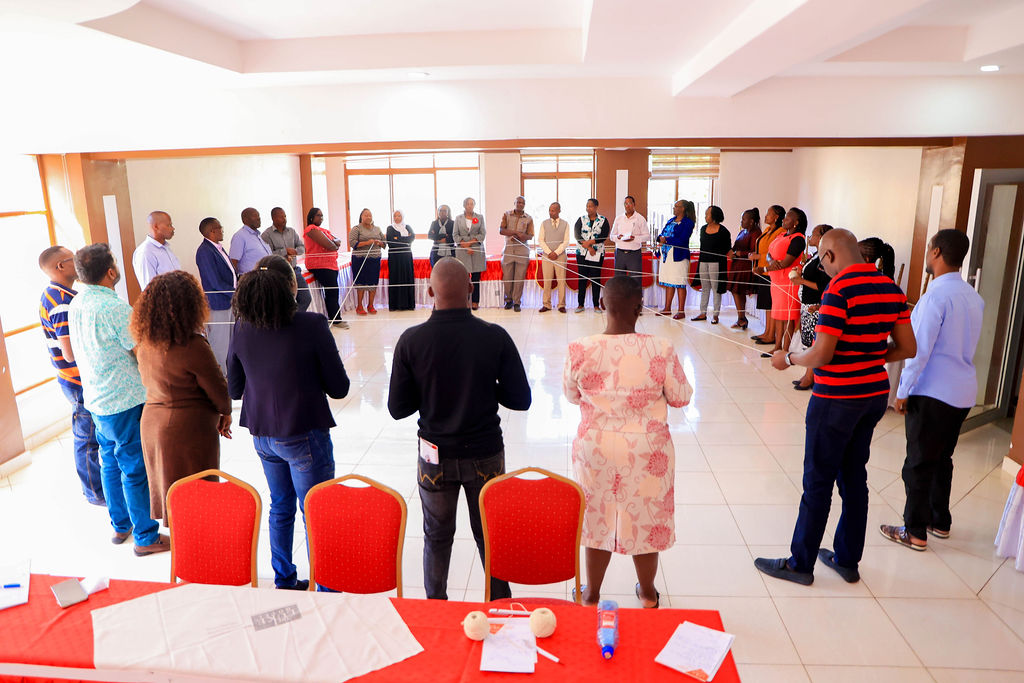
The Opening Ceremony set the tone for a powerful journey of reflection, dialogue, and transformation. Distinguished speakers offered compelling insights on the role of ethics in strengthening education and empowering students to navigate contemporary global and social challenges.
Mr. Kilian Nyambu, Deputy Director of Public Education and Engagement at the National Cohesion and Integration Commission, highlighted the essential role of ethics in building a unified and peaceful society. He noted that ethics education can help address the root causes of social and political challenges, while promoting national cohesion.
Mr. Suchith Abeyewickreme, Senior Technical Lead for Ethics Education for Children at Arigatou International, applauded Kenya’s steadfast commitment to values-based education. He spoke of ethics as a golden thread that can be woven into curricula, extracurricular activities, and everyday school life—cultivating empathy, responsibility, and critical thinking among learners.
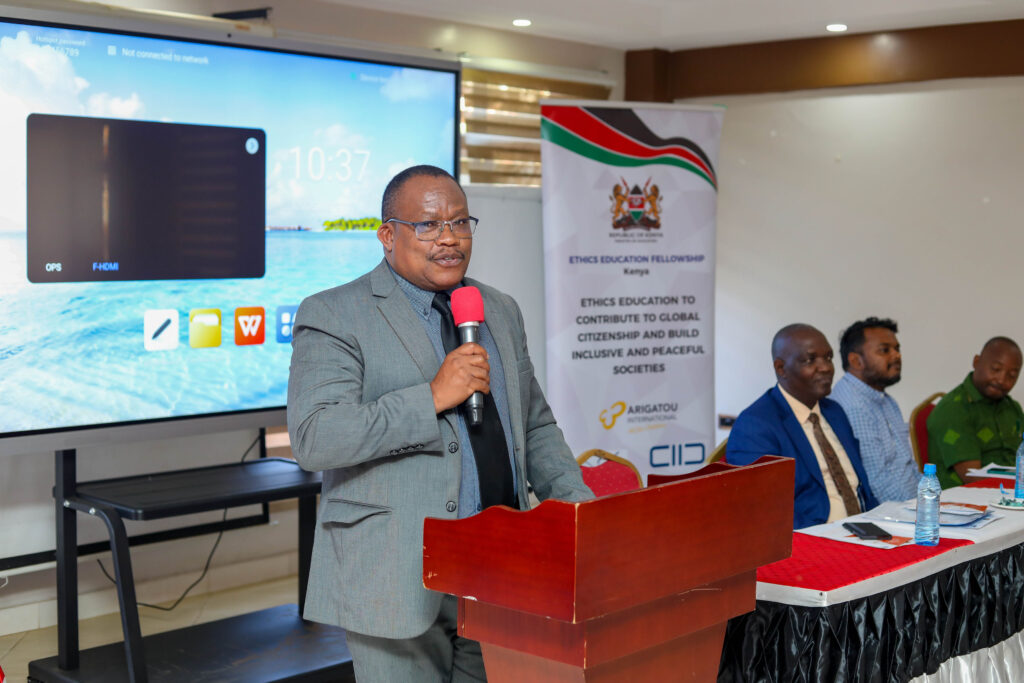
Dr. James Njugu, Acting Secretary General of the Kenya National Commission for UNESCO, celebrated the successes of Phase 1 and encouraged educators to work collaboratively to reimagine and renew the educational experience. He emphasized the importance of equipping teachers with the tools to support the aspirations of today’s youth and future generations.
Dr. Sam Ngaruiya, speaking on behalf of the Director General of Education, officially inaugurated the workshop. He reaffirmed the Ministry’s vision of nurturing ethical, responsible citizens capable of addressing both local and global challenges through education.
The five-day gathering was facilitated by Ms. Mary Kangethe, Kenya National Commission for UNESCO; Ms. Dorah Kitala, Ministry of Education; Ms. Olivia Opere, School of Education, Kenyatta University; and Mr. Suchith Abeyewickreme, Ethics Education – Arigatou International. A special highlight of the week was the return of educators from Phase 1, who served as support facilitators, generously sharing their experiences and insights to guide the new cohort.
“This initiative creates opportunities for educators to foster safe learning environments and build skills for healthy relationships and social responsibility,” stated Ms. Kangethe.
The Ethics Education Fellowship program is made possible through the collaborative efforts of Arigatou International, the Guerrand-Hermès Foundation for Peace, the International Dialogue Centre (KAICIID), the Higher Committee of Human Fraternity.
Arigatou International extends its sincere appreciation to all partners, facilitators, and participants for their unwavering leadership. Congratulations to the newly trained educators who are taking bold steps to embed ethics education into their classrooms and communities across Kenya.
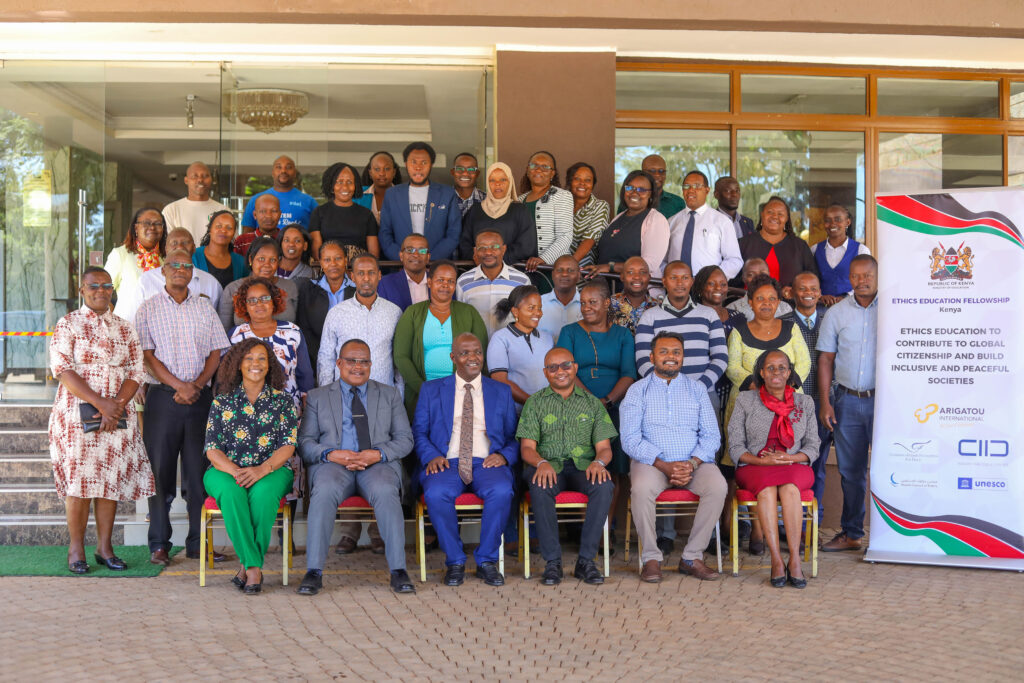
The post Ethics Education Expands Its Reach in Kenya – Phase 2 of the Ethics Education Fellowship Launches appeared first on Ethics Education for Children.
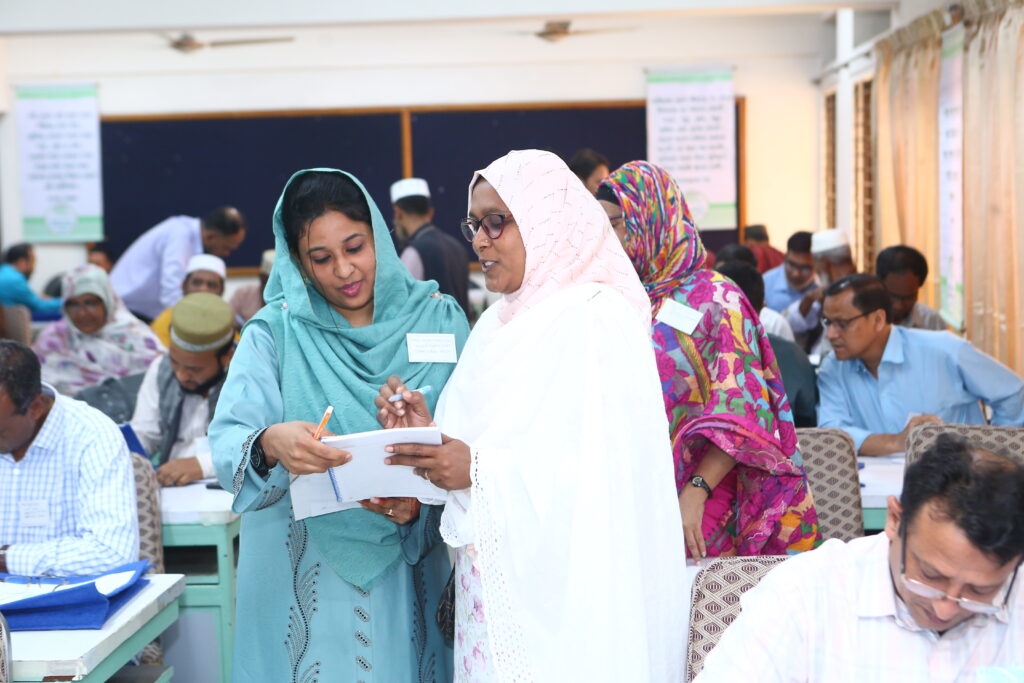
From February 23 to 27, a major step forward was taken in the expansion of ethics education in Bangladesh with the successful completion of the second National Training of Teachers in Dhaka. Organized as part of the Ethics Education Fellowship Program, the five-day immersive workshop brought together 48 teachers from 16 general schools and 8 madrasas, strengthening their capacity to introduce ethics education in their classrooms.
These newly trained educators build on the foundation laid during the program’s first phase, where 20 teachers were trained and are still actively engaged, implementing ethics education activities with their students. With the addition of this new cohort, the program continues to grow in reach and impact. The second phase alone aims to engage 480 new learners, complementing the 200 children reached during the initial phase.
Additionally, more than 21,000 teachers will participate in a 6-hour online learning module as part of a program funded by the World Bank.
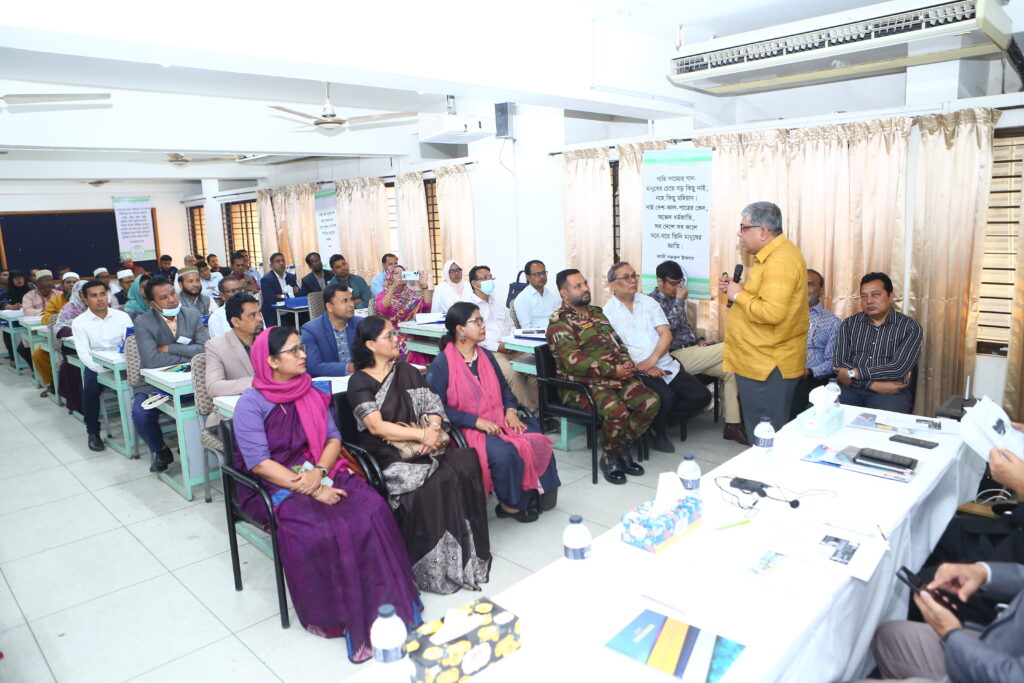
The training was facilitated by a dedicated team of Ethics Education Fellows, who are leading the implementation of the program in the country: Ms. Geetanjali Barua, Mr. Shafiul Alam, Lt. Col. Zonayed Ahmed, and Mr. Joydip Dey.
Throughout the week, participants engaged in dynamic and interactive sessions that focused on designing and facilitating ethics education sessions, applying transformative pedagogical approaches, and creating safe spaces for dialogue. The aim was to strengthen teachers’ capacities to empower students in navigating ethical challenges with confidence, empathy, and understanding.
A highlight of the training was an interfaith learning experience that allowed educators to reflect on ethical values from diverse religious perspectives. At St. Mary’s Cathedral, participants engaged in dialogue with Archbishop Bejoy Nicephorus D’Cruze, exploring key pillars of the Catholic faith, including the Golden Rule: “Do unto others as you would have them do unto you.” They also visited the Ramakrishna Mission in Dhaka, where they delved into the Hindu perspective on interconnectedness and the teacher’s role as a guide who helps remove barriers to learning.
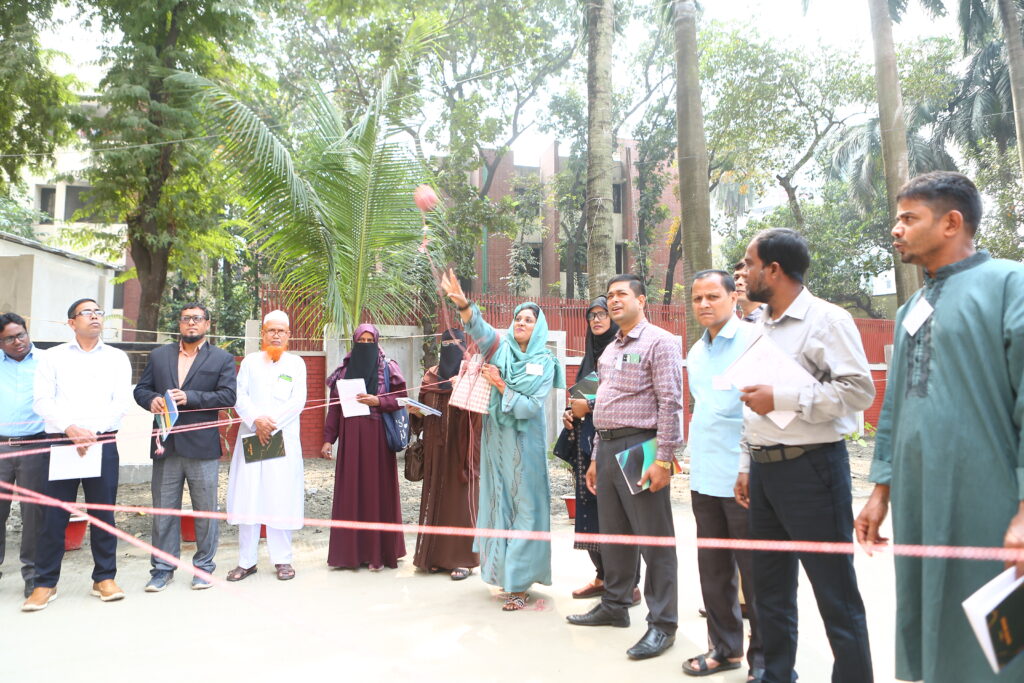
Reflecting on the experience, one participant shared, “I am very happy that a beautiful journey has begun. Just as I will benefit from the learning outcomes of the Ethics Education Training, my students will also be enlightened. I hope that together we will ignite the light in our hearts, and that light will illuminate the world.”
In parallel with the training, Mr. Francisco Vila, Head of Programmes at Arigatou International Geneva, met with several key education leaders to explore the future of ethics education in the country. His meetings with Mr. Hasan Maruf, Additional Secretary for Development at the Ministry of Education; Dr. Muhammad Azad Khan, Director General of the Directorate of Secondary and Higher Education; and Dr. Shafiul Azam, Director of Planning and Development, focused on reviewing the achievements of the first phase of the Fellowship and identifying advocacy opportunities to integrate ethics education into national policy.
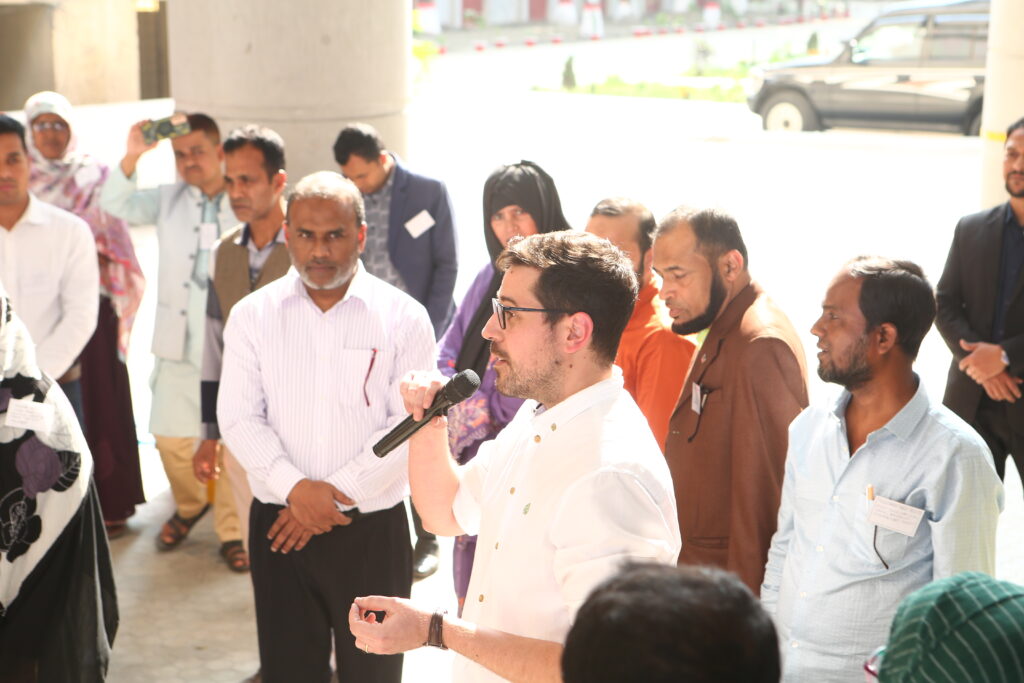
Further discussions with Mr. Abdul Mannan, Director General of the Madrasah Education Directorate, highlighted the deep connection between religious education and ethical practice, and the potential of this program to translate values into concrete action. At the National Academy for Educational Management (NAEM), Director General Dr. Md. Zulfewar Haider and Director of Training Prof. Ferdousi Begum explored ways to integrate ethics education into leadership development for headteachers and proposed new training for Academy staff to incorporate ethics into their existing programs. Meanwhile, Prof. Rejiya Sultana, Principal of the Government Teachers Training College in Dhaka, hosted Mr. Vila on campus and expressed strong interest in embedding ethics education into national teacher training programs.
We thank the Ministry of Education of Bangladesh for its commitment, the participating teachers for their dedication, and the Ethics Education Fellows for their leadership. Together, they are paving the way for more inclusive education in Bangladesh—one that nurtures respectful relationships, encourages dialogue, and empowers children to make a positive impact in their communities.
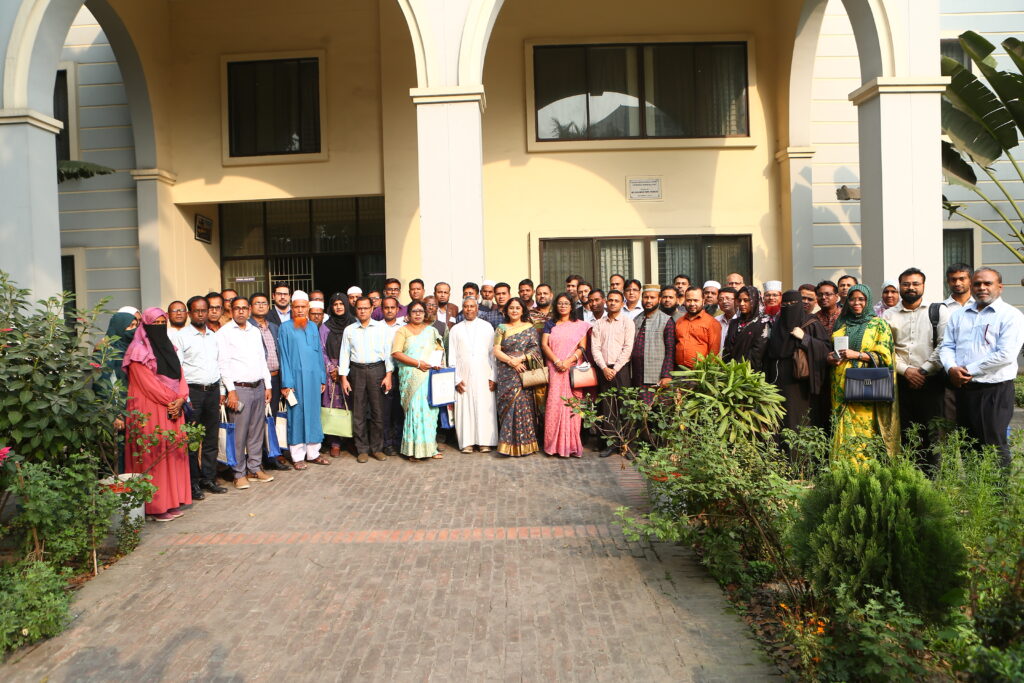
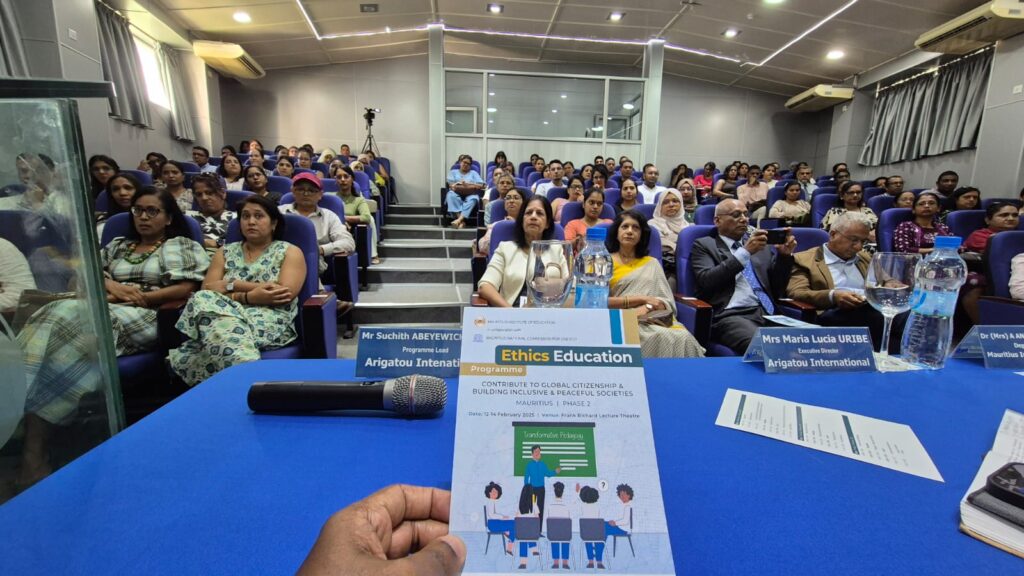
The Ethics Education Fellowship has officially entered its second phase in Mauritius with an inspiring series of training workshops that reached 148 educators from across the country. This second phase aims to reach 1,250 new learners across 46 schools in Mauritius, including Rodrigues Island, building on the solid foundation of the first phase.
Organized in collaboration with the Ministry of Education and Human Resources, the Mauritius Institute of Education, and Arigatou International, the training focused on equipping teachers to promote inclusive and safe learning environments in their classrooms.
The first training workshop was held from 12 to 14 February 2025 at the Mauritius Institute of Education (MIE). The opening ceremony gathered key leaders from the education sector, including Professor Kiran Bhujun, Director of Tertiary Education, Science and Research; Dr. Surekha Devi Ramful, Director of Schooling at the Mahatma Gandhi Institute; Dr. Guy Jean-Noel Genevieve, Director of Primary Education, Curriculum Development and Evaluation; Mr. Rajiv Kumar Aukhojee, Director of Secondary Education; and Dr. Jimmy Harmon, Deputy Director for Secondary Education. Their presence underscored the strong institutional commitment to advancing ethics education.
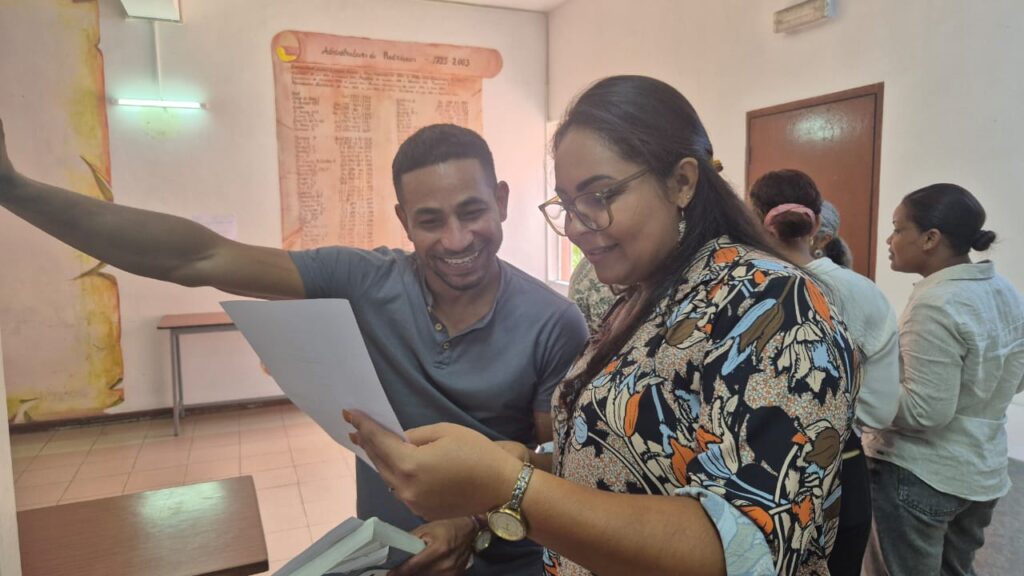
Facilitated by local Ethics Education Fellows, Mr. Jay Ramsaha and Mr. Kumar Aukhojee, the sessions introduced educators to the pillars of ethics education, the ecology of the child, and strategies for building safe learning environments. Teachers engaged in meaningful discussions on the role of ethics in education, exploring how these principles can help address social challenges and foster mutual respect in classrooms.
In parallel with the training, Ms. Maria Lucia Uribe, Executive Director of Arigatou International, and Mr. Suchith Abeyewikreme, Senior Program Lead, met with Mr. Veersingh Boodhna, Permanent Secretary of the Ministry of Education and Human Resources. They were joined by Mr. R. K. Aukhojee and Dr. J. N. Genevieve for a productive exchange about scaling up and institutionalizing ethics education in Mauritius. Mr. Boodhna expressed strong support for the second phase of the Fellowship and shared his interest in promoting Mauritius as an example for other countries seeking to transform education.
The visit also included strategic meetings with the Mauritius Institute of Education, where Ms. Uribe met Dr. Aruna Ankiah-Gangadeen, Deputy Director, to explore deeper collaboration on teacher training. Fellows Mr. Jay Ramsaha and Ms. Seema Goburdhun contributed valuable insights based on their work as MIE lecturers. The team also met with Dr. Vassen Naeck, Acting Director of the Fortified Learning Environment Unit at the National Social Inclusion Foundation, to explore ways to extend ethics education to tutors and coordinators working with children living in poverty.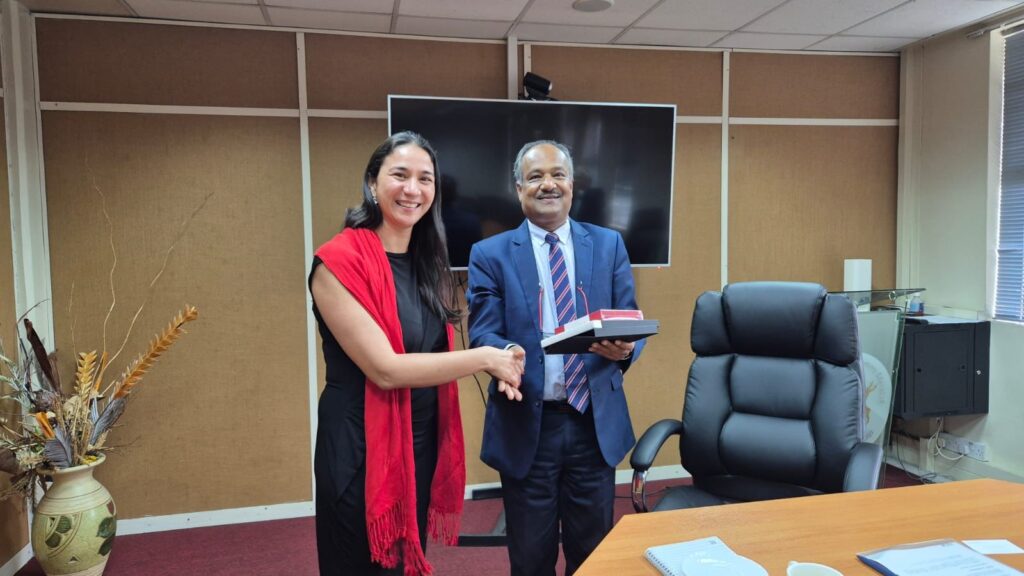
Further dialogue took place with the Office of the Ombudsperson for Children. In a meeting with Ms. Aneeta Ghoorah, the discussion focused on integrating ethics education into non-formal education settings, with particular interest in expanding activities to primary schools. Additionally, the team engaged with the Technical Committee on the Foundation Programme in Literacy, Numeracy, and Skills (FPLNS) to explore how ethics education and dialogue can be embedded into national curriculum initiatives that build self-esteem, critical thinking, and ethical decision-making in learners.
During their time in Mauritius, the team also met with the M-Kids Organization Youth Council, a national NGO devoted to empowering vulnerable children through community-based initiatives. Conversations with Imam Arshad Joomon, Director of M-Kids, and Ms. Oumaimah AG J, Director of Programmes, opened exciting possibilities for collaboration around ethics education and child spiritual development.
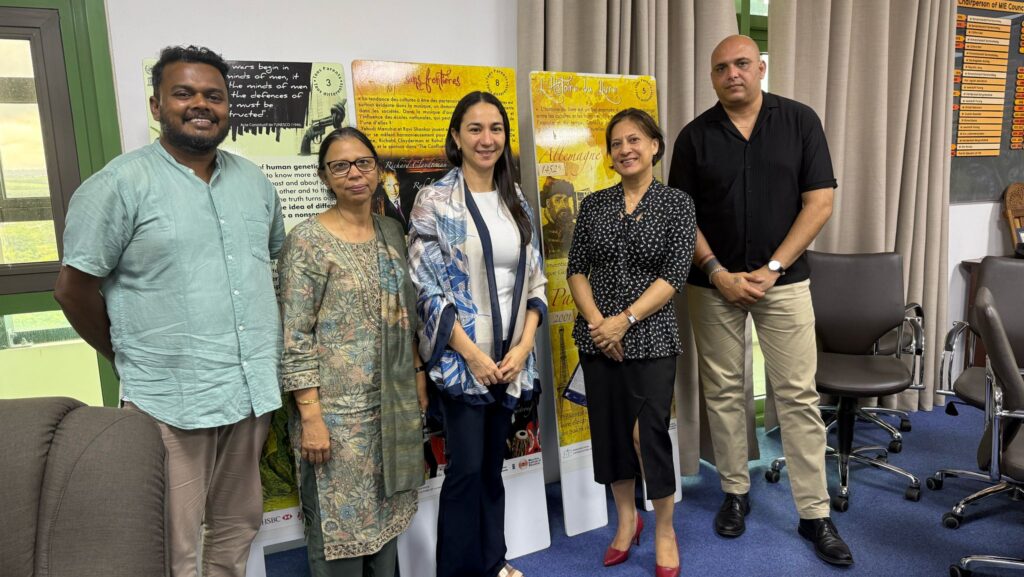
The journey continued to Rodrigues Island, where a second workshop was held from 19 to 21 February 2025. Twenty-eight teachers from eight secondary schools took part in the three-day training, which was led by Ethics Education Fellows and MIE lecturers Mr. Jay Ramsaha and Dr. Rajendra Korlapu-Bungaree. This extension of the program to Rodrigues highlights the Fellowship’s commitment to inclusion and national reach.
The second phase of the Ethics Education Fellowship in Mauritius is made possible through a partnership between Arigatou International, UNESCO Regional Office for Eastern Africa, the International Dialogue Centre (KAICIID), Human Fraternity, and the Guerrand-Hermès Foundation for Peace. With visionary leadership, institutional support, and the dedication of educators and fellows, Mauritius is moving decisively toward a future where education empowers children to live together in peace, guided by values of respect, empathy, and shared responsibility.
El Grupo Español de Trabajo en Enfermedad de Crohn y Colitis Ulcerosa (GETECCU) y la Confederación de Asociaciones de Enfermos de Crohn y Colitis Ulcerosa de España (ACCU España), dos entidades de referencia en el ámbito de la Enfermedad Inflamatoria Intestinal (EII) en nuestro país, han renovado su acuerdo de colaboración en enero de 2025, con el objetivo de seguir impulsando acciones conjuntas en investigación, sensibilización y mejora de la calidad asistencial en EII.
La renovación consolida el compromiso de ambas entidades para impulsar la investigación, la sensibilización y la mejora asistencial.
Este convenio, que actualiza el firmado originalmente en 2018 y renovado en 2021, consolida el compromiso de ambas entidades con la excelencia en la atención integral centrada en la persona. Gracias a esta alianza, GETECCU y ACCU España continuarán trabajando de forma coordinada en la promoción de la investigación, la formación de profesionales y pacientes, la visibilidad y la concienciación social sobre los desafíos que supone vivir con una EII.
Ambas organizaciones pondrán en marcha diferentes acciones para garantizar la aplicación de la medicina basada en la evidencia y la divulgación de información rigurosa y accesible que permita combatir la desinformación y facilitar el acceso a conocimientos científicos actualizados sobre la patología.
El acuerdo también refuerza el compromiso de ambas entidades con la defensa de los derechos de los pacientes, promoviendo una mayor implicación en su propio proceso asistencial tomando un rol activo en la toma de decisiones. Tanto GETECCU como ACCU España consideran fundamental este enfoque participativo, apostando por iniciativas que doten a las personas con EII de herramientas que les ayuden a gestionar su situación de manera informada.
Del mismo modo, se impulsará la participación en el diseño y desarrollo de proyectos de investigación y gestión que incorporen la voz de los pacientes, garantizando así que los avances en materia sanitaria reflejen sus necesidades reales.
Dña. Lucía Expósito, presidenta de ACCU España, ha destacado que «esta renovación es un paso adelante en nuestro objetivo de mejorar la realidad de quienes convivimos con la EII. No solo buscamos mejores tratamientos, sino un cambio de paradigma que sitúe a los pacientes en el centro de todas las decisiones, desde la investigación hasta las políticas de salud «.
Por su parte, la Dra. Yamile Zabana, presidenta de GETECCU, ha subrayado que «con esta acción, GETECCU demuestra su compromiso por visibilizar la EII, dando relevancia a la voz de quienes viven la enfermedad. Seguir trabajando con esta iniciativa nos permite avanzar en el acceso equitativo de la asistencia y el desarrollo de iniciativas que respondan a necesidades reales de nuestros pacientes.».
El Dr. Daniel Ginard, vicepresidente y coordinador del área social de GETECCU, ha resaltado que «la alianza entre profesionales y pacientes es clave para avanzar juntos, afrontar desafíos y alcanzar objetivos comunes. Solo trabajando de forma coordinada podemos mejorar la calidad de vida de los pacientes con EII».
Con esta renovación, GETECCU y ACCU España reafirman su compromiso con la atención integral de la EII, promoviendo iniciativas conjuntas que mejoren la calidad de vida y la inclusión de quienes conviven con esta enfermedad.
A new chapter in ethics education began in Salamanca, Guanajuato, as 15 facilitators participated in a Learning to Live Together training workshop. The event, held in collaboration with the Secretary of Education of Guanajuato (SEG) and ‘Comunidad FAST’ (Faith, Social Action and Transformation), marks a significant effort to foster social and emotional skills among young students.
The workshop, held from January 31 to February 3, 2025, is part of a strategic initiative to foster safe learning environments, protect children from violence and promote their holistic well-being. Facilitators trained during this workshop will implement the Learning to Live Together program in 28 public schools across Salamanca throughout the school year, reaching more than 5,000 young people aged 12 to 15. Salamanca was specifically chosen due to its high levels of violence, organized crime, and child recruitment, making this initiative a crucial step in promoting peace and safety for children and adolescents.
Facilitated by Mr. Francisco Vila, Head of Programs, and Ms. Silvia Correa, Consultant on Ethics Education, both from Arigatou International – Geneva, the workshop was organized with the support of GNRC México under the leadership of Ms. Sandra Cazares, Pastor and Founder of ‘Comunidad FAST.’
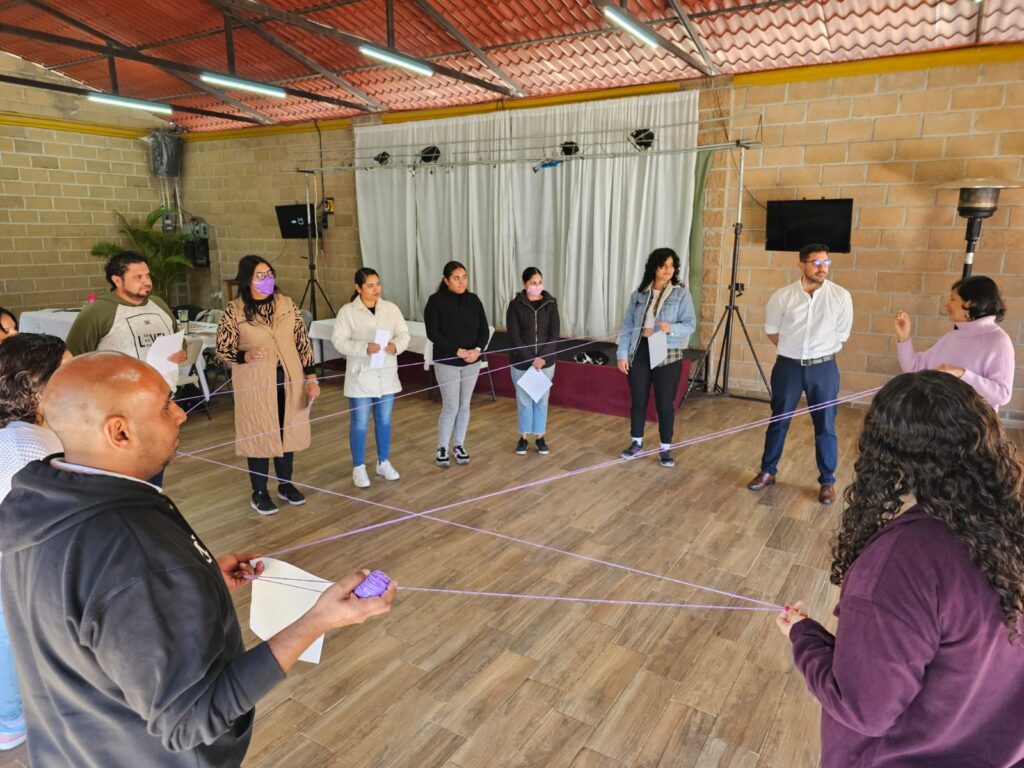
The training aimed to equip educators, youth leaders, and social workers with essential methodologies and resources to implement ethics education programs effectively within their communities. By the end of the workshop, participants had developed a profound understanding of the core concepts, methodologies, and educational approach of Learning to Live Together, enabling them to refine their teaching strategies and create meaningful learning experiences.
Ms. Cesia Espinoza, a workshop participant, reflected on her experience: “I arrived at the facilitator workshop expecting to receive tools to implement the program, and while I did gain those, it was also a transformative experience that reconnected me with my spirituality. It showed me how, through ethical values, we can plant the seeds of change in our surroundings.” This sentiment was echoed by Ms. Patricia Restrepo, who added, “This experience has enriched me and strengthened my conviction in the methodology and philosophy of working for children and adolescents from a holistic perspective, rooted in spirituality—starting from within ourselves.”
Ms. Teresa Castellanos, an official from SEG and President of EduPaz, visited the workshop and engaged in a dialogue with the participants. She shared insights on the pressing issues of violence affecting children and adolescents in the region, fostering an open discussion on the role of education in addressing these challenges. Inspired by her words, many participants reaffirmed their commitment to fostering safe spaces for young learners. They engaged in thoughtful discussions on the impact of violence on children and adolescents, emphasizing the transformative role of values-based education in challenging environments.
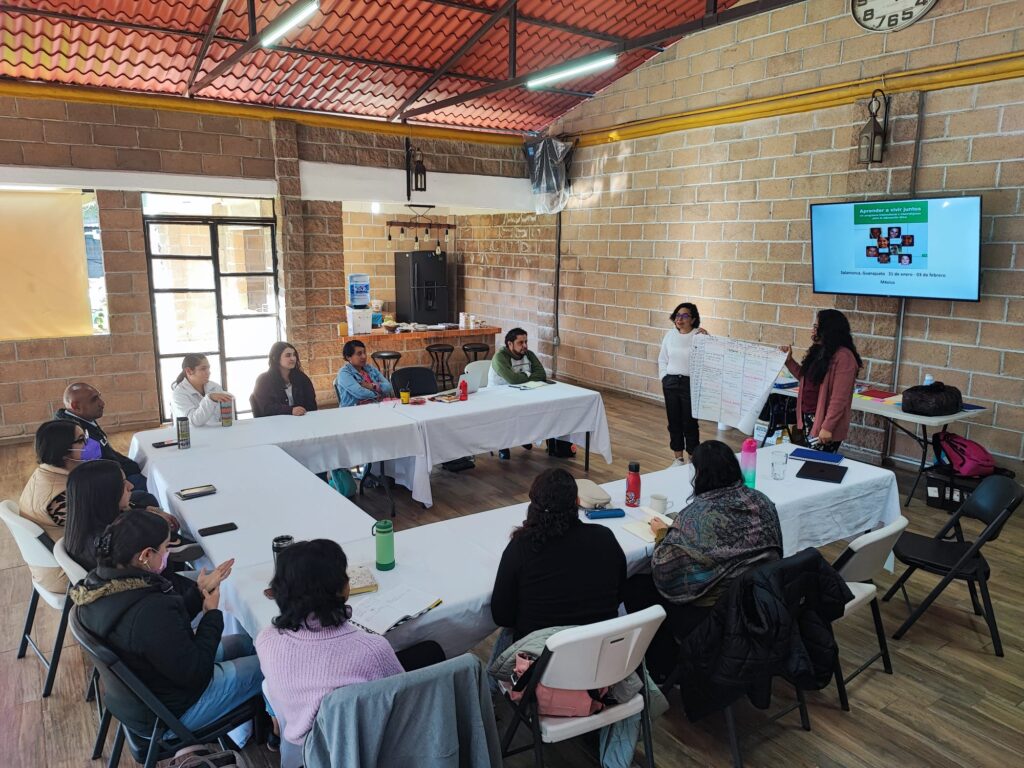
Through interactive sessions and reflective exercises, participants gained the knowledge and skills needed to design ethics education programs tailored to their specific contexts. Additionally, the sessions provided valuable insights into monitoring and evaluation tools, ensuring the sustainability of the initiatives.
“I am convinced that we will reach many lives and homes, paving the way for a better world based on love, empathy, respect, and reconciliation—fundamental values both for the foundation and society, which need to be strengthened and, most importantly, lived,” reflected Ana Laura Aguilera at the end of the workshop.
Following the training, teachers will bring this program to life, inspiring adolescents to become changemakers in their communities. By fostering creativity and leadership, students will not only develop meaningful projects but also amplify their voices, take ownership of their spaces, and lead transformative initiatives that shape a brighter future for themselves and those around them.
“We don’t see Learning to Live Together as a project with a start and end, but rather as an ongoing element that strengthens our work as a faith-based community, allowing us to offer true guidance to adolescents,” explained Sandra Cazares when discussing the next steps. “It was a deeply enriching experience that encouraged us to connect with ourselves, with God, and with our communities. It equipped us to foster empathy, methodically address conflict resolution, self-esteem, and peacebuilding, critically analyze injustices, and, most importantly, it mobilized us into action.”
Salamanca is currently considered a priority area by the State of Guanajuato due to its high levels of violence and school dropout rates. Through ethics education and intercultural and interfaith learning, this workshop represents a powerful step toward building pathways to peace and creating safe spaces for young people in Salamanca and beyond.
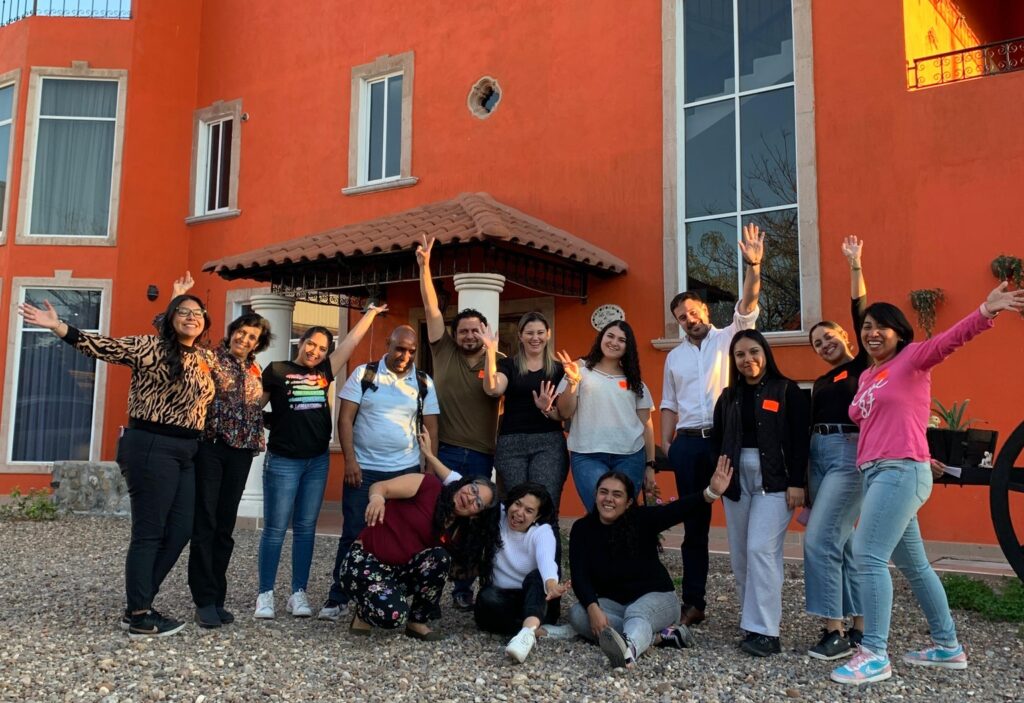
The post Breaking New Ground: Learning to Live Together Training Workshop Arrives in Salamanca, Mexico appeared first on Ethics Education for Children.